

As a supplier of signal jammers, I often encounter inquiries about the applicability of our products in various settings. One question that frequently arises is whether a signal jammer can be used in a prison. In this blog post, I will delve into the scientific, legal, and practical aspects of using signal jammers in prison environments.
The Need for Signal Jammers in Prisons
Prisons are institutions designed to maintain security, order, and rehabilitation. However, the widespread use of mobile phones has introduced new challenges to prison management. Inmates with access to mobile phones can engage in a range of illegal activities, including coordinating criminal operations outside the prison, harassing victims, and smuggling drugs or weapons. According to a report by the Bureau of Justice Statistics, the number of illegal mobile phones seized in U.S. prisons has been steadily increasing in recent years, highlighting the severity of the problem.
Signal jammers offer a potential solution to this issue by blocking mobile phone signals within a defined area. By preventing inmates from using mobile phones, prisons can enhance security, reduce the risk of criminal activity, and protect the safety of staff and other inmates.
How Signal Jammers Work
Signal jammers operate by emitting radio frequency (RF) signals that interfere with the normal operation of mobile phones. These signals are transmitted at the same frequencies used by mobile networks, effectively creating a "noise" that disrupts the communication between the phone and the cell tower. There are different types of signal jammers, each designed to block specific frequency bands. For example, some jammers are designed to block only 2G, 3G, or 4G signals, while others can block multiple bands simultaneously.
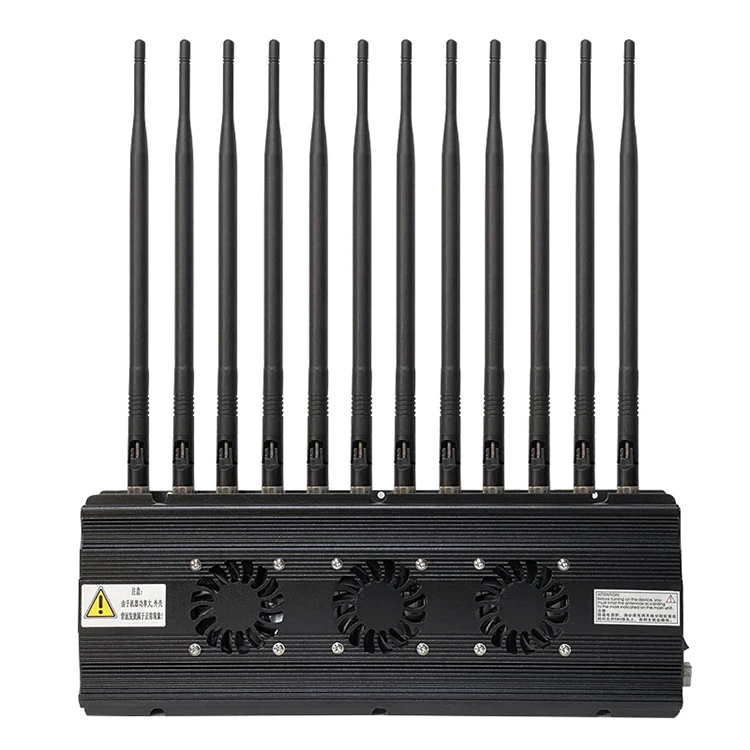
Our company offers a range of high-quality signal jammers, including the Mobile Phone Signal Jammer High Power 12 Antennas High Power Phone Signal Jammer and the Mobile Phone Signal Jammer High Power 8 Antennas High Power Phone Signal Jammer. These jammers are equipped with multiple antennas to ensure wide coverage and high jamming efficiency.
Scientific Considerations
When considering the use of signal jammers in prisons, it is important to take into account the scientific aspects of their operation. One of the key factors is the coverage area of the jammer. The coverage area depends on several factors, including the power of the jammer, the type of antenna used, and the surrounding environment. In a prison setting, the presence of thick walls, metal structures, and other obstacles can affect the signal propagation and reduce the coverage area. Therefore, it is essential to choose a jammer with sufficient power and the appropriate antenna configuration to ensure effective coverage.
Another important consideration is the impact of signal jammers on other electronic devices. Signal jammers emit RF signals that can potentially interfere with other electronic equipment, such as medical devices, fire alarms, and communication systems. To minimize this risk, our signal jammers are designed to operate within strict frequency limits and comply with relevant safety standards.
Legal Considerations
The use of signal jammers is regulated by law in many countries. In the United States, for example, the Federal Communications Commission (FCC) prohibits the use, sale, or import of signal jammers, except in certain authorized circumstances. Prisons may be eligible for a special exemption from the FCC if they can demonstrate a legitimate need for the use of signal jammers to maintain security.
In other countries, the legal situation may vary. Some countries allow the use of signal jammers in specific settings, such as prisons, while others have more restrictive regulations. It is crucial for prisons to consult with local authorities and legal experts to ensure compliance with the relevant laws and regulations before installing signal jammers.

Practical Considerations
In addition to the scientific and legal aspects, there are also practical considerations when using signal jammers in prisons. One of the main challenges is the installation and maintenance of the jammers. Signal jammers need to be installed in strategic locations to ensure maximum coverage. This may require professional installation services to ensure proper placement and alignment of the antennas.
Another practical consideration is the cost of the signal jammers. Signal jammers can be expensive, especially high-power models with multiple antennas. Prisons need to carefully evaluate the cost-benefit ratio of using signal jammers and consider alternative solutions, such as enhanced security measures and inmate education programs.
Case Studies
There are several examples of prisons around the world that have successfully implemented signal jammers to address the issue of illegal mobile phone use. For instance, in some European countries, prisons have installed signal jammers in cell blocks, common areas, and perimeter fences to prevent inmates from using mobile phones. These installations have resulted in a significant reduction in the number of illegal mobile phones seized and a corresponding improvement in prison security.
Conclusion
In conclusion, the use of signal jammers in prisons can be a viable solution to the problem of illegal mobile phone use. However, it is important to carefully consider the scientific, legal, and practical aspects before making a decision. Our company, as a leading supplier of signal jammers, can provide you with the necessary information and support to help you choose the right product for your prison.
If you are interested in learning more about our signal jammers or discussing the possibility of using them in your prison, please do not hesitate to contact us. We are committed to providing high-quality products and excellent customer service to meet your specific needs.
References
- Bureau of Justice Statistics. (Year). [Report on illegal mobile phone seizures in U.S. prisons].
- Federal Communications Commission. (Year). Rules and regulations regarding signal jammers.
- Various case studies on the use of signal jammers in prisons from international sources.