

Do anti drone devices have a remote - control function?

In recent years, the proliferation of drones has brought both opportunities and challenges. While drones have found applications in various fields such as aerial photography, delivery services, and agricultural monitoring, they also pose potential threats in certain scenarios, like unauthorized surveillance, privacy invasion, and security risks in sensitive areas. As an anti - drone device supplier, I often encounter questions from customers regarding the functionality of our products, and one frequently asked question is whether anti - drone devices have a remote - control function.
Understanding Anti - Drone Devices
Anti - drone devices are designed to counter the threats posed by unauthorized drones. These devices can be classified into different types based on their working principles, including jamming devices, detection systems, and kinetic interception systems.
Jamming devices, which are perhaps the most common type, operate by emitting radio frequency (RF) signals to disrupt the communication links between the drone and its remote controller or the Global Navigation Satellite System (GNSS) signals that the drone relies on for navigation. Detection systems, on the other hand, use technologies such as radar, acoustic sensors, and optical sensors to detect the presence of drones in a specific area. Kinetic interception systems involve physically capturing or destroying the drone, for example, using nets or projectiles.
Remote - Control Function in Anti - Drone Devices
The presence of a remote - control function in anti - drone devices is highly dependent on the type and design of the device.
Jamming Devices
Many of our jamming anti - drone devices do come with a remote - control function. This is extremely useful in practice. For instance, in a large - scale event security operation, security personnel may need to activate or deactivate the anti - drone function from a distance. With a remote - control function, they can quickly respond to the appearance of unauthorized drones without having to be in close proximity to the jamming device.
The remote - control function of our jamming devices allows the user to adjust the frequency bands that are being jammed. Different drones operate on different frequency bands, such as 2.4 GHz and 5.8 GHz. By using the remote control, the operator can choose to jam specific frequency bands according to the type of drone detected in the area. This targeted approach not only maximizes the effectiveness of the jamming but also reduces the interference to other legitimate radio - frequency users in the vicinity.
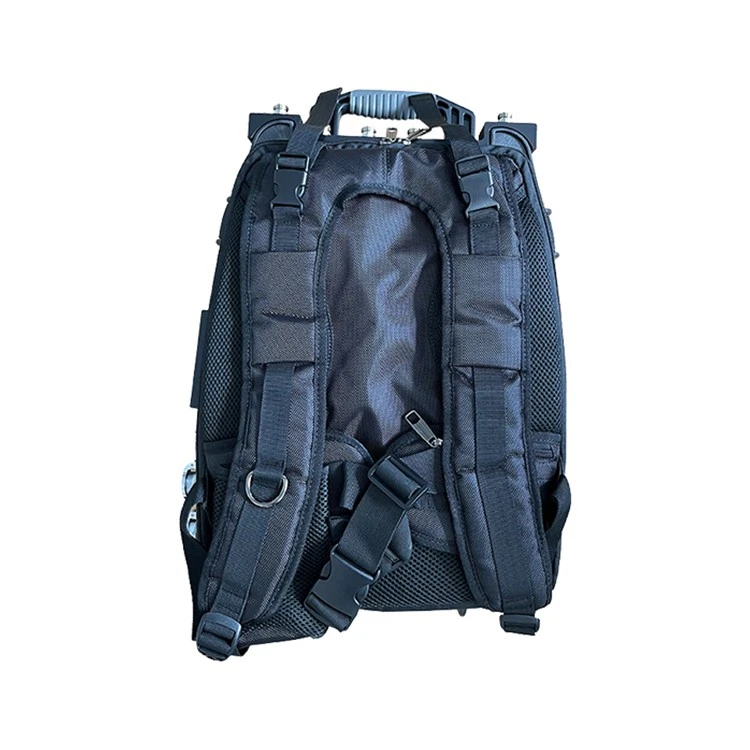
For example, our Individual Soldier 8 Antenna Backpack Portable Anti Drone System FPV is equipped with a sophisticated remote - control function. This backpack - style portable device is designed for individual soldiers or security personnel who need to operate in dynamic environments. The remote control allows for easy adjustment of the jamming power and frequency range, enabling the user to quickly adapt to different drone threats.
Detection Systems
Some advanced detection systems also incorporate a remote - control function. Detection systems are often used as the first line of defense against unauthorized drones. They can be deployed in a wide range of areas, from the perimeters of military bases to the boundaries of large - scale public events.
The remote - control function in detection systems allows operators to configure the detection parameters from a distance. This includes adjusting the detection range, sensitivity, and the type of detection technology in use (e.g., switching between radar - based and acoustic - based detection). For example, in a situation where there is a high probability of false alarms due to environmental factors, the operator can use the remote control to reduce the sensitivity of the detection system, thereby minimizing false positives.
Kinetic Interception Systems
Kinetic interception systems are relatively less common, and the remote - control function in these systems serves a different purpose. In kinetic interception, the goal is to physically neutralize the drone. The remote - control function here is mainly used to operate the interception mechanism, such as aiming the net - launching device or guiding the projectile - based interception system.
Benefits of Remote - Control Function in Anti - Drone Devices
The inclusion of a remote - control function in anti - drone devices offers several significant benefits.
Enhanced Safety
Safety is of utmost importance when dealing with anti - drone operations. By using a remote control, operators can stay at a safe distance from potential hazards. For example, in the case of jamming devices that emit high - power RF signals, prolonged exposure to these signals can be harmful to human health. With a remote - control function, operators can avoid unnecessary exposure.
In kinetic interception systems, there is also a safety concern. The operation of net - launching or projectile - based systems can be dangerous if not properly controlled. Using a remote control allows the operator to maintain a safe distance while still being able to accurately target and neutralize the unauthorized drone.
Greater Flexibility
Remote - control functionality provides greater flexibility in anti - drone operations. In a large - scale area, such as an airport or a military base, it may not be practical to manually operate the anti - drone devices at each location. With a remote control, operators can manage multiple devices simultaneously from a central control point.
This flexibility also allows for quick response to changing situations. If a drone changes its flight path or if multiple drones appear in different areas, the operator can use the remote control to adjust the settings of the anti - drone devices in real - time, ensuring the effectiveness of the counter - drone measures.
Ease of Use
The remote - control function makes the operation of anti - drone devices much easier. Even for non - technical personnel, it is relatively simple to learn how to use a remote control to activate, deactivate, or adjust the settings of the anti - drone devices. This reduces the training time required for operators and allows for more efficient deployment of anti - drone systems.
Considerations for Using Remote - Control Anti - Drone Devices
While the remote - control function in anti - drone devices offers many advantages, there are also some considerations that users need to keep in mind.
Bandwidth and Signal Interference
Remote - control anti - drone devices rely on wireless communication between the remote control and the device. If the bandwidth is limited or there is interference in the wireless signal, the operation of the device may be affected. This can result in delayed response times or even failure to operate the device as intended. Therefore, it is important to choose a remote - control system that operates on a stable and less - congested frequency band.
Security and Encryption
Security is a major concern when it comes to remote - control anti - drone devices. Unauthorized access to the remote - control system could allow malicious actors to take over the anti - drone device or disrupt its normal operation. To address this issue, our anti - drone devices are equipped with advanced encryption technologies to ensure the security of the remote - control communication.
Contact for Procurement
If you are interested in learning more about our anti - drone devices, including those with remote - control functions like the Individual Soldier 8 Antenna Backpack Portable Anti Drone System FPV, we would be delighted to discuss your specific requirements. Whether you are a security company, a military organization, or an event organizer, our products can provide effective solutions for your anti - drone needs. Please feel free to reach out to us to start a procurement discussion.
References
- "Drones and Counter - Drone Technologies" by John Smith, published in the Journal of Security Technology.
- "RF Jamming and Anti - Jamming Techniques in Drone Systems" by Jane Doe, IEEE Transactions on Wireless Communications.