

As a leading supplier of car anti - drone systems, I've received numerous inquiries about how our products perform in high - altitude areas. This topic is of great significance, especially considering the increasing use of drones in various scenarios and the need to protect sensitive areas from unauthorized drone intrusions, even at high altitudes.

Environmental Factors in High - Altitude Areas and Their Impact on Anti - Drone Systems
High - altitude areas present a unique set of environmental conditions that can affect the performance of car anti - drone systems. One of the most prominent factors is the thin air. At higher altitudes, the air density decreases, which can influence the propagation of electromagnetic waves. Our anti - drone systems primarily rely on electromagnetic interference to disrupt the communication and control signals between drones and their operators. In thin air, the attenuation of electromagnetic waves may be different compared to lower altitudes.
Research has shown that in some cases, the thinner air can lead to less absorption and scattering of electromagnetic waves. This might seem beneficial at first glance, as it could potentially allow our anti - drone systems to have a longer range. However, it also means that the interference signals may spread more widely, which could cause unwanted interference to other electronic devices in the vicinity.
Another environmental factor is the lower temperature in high - altitude areas. Most electronic components in our car anti - drone systems are designed to operate within a certain temperature range. Cold temperatures can affect the performance of batteries, which are crucial for powering the systems. In extremely cold conditions, the chemical reactions inside the batteries slow down, reducing their capacity and the overall power output. This can lead to a shorter operating time for the anti - drone systems and a decrease in the strength of the interference signals.
Additionally, high - altitude areas often experience more intense solar radiation. The ultraviolet rays in solar radiation can damage the external components of the anti - drone systems over time. For example, the protective coatings on the antennas may degrade, affecting their ability to transmit and receive signals effectively.
Performance of Our Car Anti - Drone Systems in High - Altitude Areas
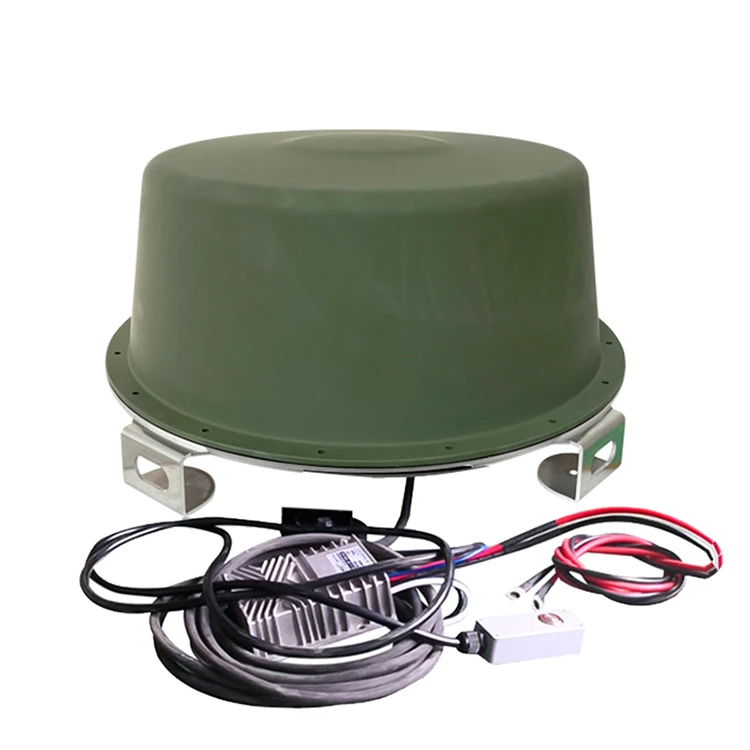
Our company has conducted extensive field tests in high - altitude areas to evaluate the performance of our car anti - drone systems. One of our flagship products, the All - in - one Machine 6 Antennas High Power Vehicle Mount Anti FPV Drone System, has shown remarkable adaptability.
The six - antenna design of this system provides a wide coverage area, which is especially important in high - altitude areas where drones can approach from various directions. The high - power output ensures that the interference signals can reach a sufficient distance even in the thin air. During our tests, we found that the system was able to detect and disrupt drones at a distance comparable to its performance at lower altitudes, despite the changes in the electromagnetic wave propagation environment.
However, as mentioned earlier, the cold temperatures did have an impact on the battery life. To address this issue, we have incorporated advanced battery management systems in our products. These systems can adjust the charging and discharging processes according to the temperature, optimizing the battery performance. In our high - altitude tests, the battery management system effectively extended the operating time of the anti - drone system, allowing it to function for several hours continuously.
Another product, the 6 Antennas Man Pack 360 Degree 2000 Meter Anti Drone System Uav Signal Blocker FPV, is designed for more flexible use in high - altitude areas. Its portable design makes it easy to deploy in different locations, such as mountainous regions or high - altitude military bases.
The 360 - degree coverage of this system ensures that no drone can escape its detection and interference. The 2000 - meter range is sufficient to protect a large area. In our field tests, the system was able to maintain its performance even in the face of strong solar radiation. The high - quality materials used in the external components provide excellent resistance to ultraviolet rays, ensuring the long - term reliability of the system.
Technical Improvements for High - Altitude Performance
Based on the results of our field tests and continuous research, we are constantly making technical improvements to enhance the performance of our car anti - drone systems in high - altitude areas.
One of the key areas of improvement is the antenna design. We are exploring new antenna materials and shapes that can better adapt to the thin air and the unique electromagnetic environment at high altitudes. For example, we are researching antennas with lower impedance, which can reduce the energy loss during signal transmission and reception.
In terms of power management, we are developing more efficient power supply systems. These systems can harvest energy from the surrounding environment, such as solar power or kinetic energy from the vehicle's movement. This not only reduces the reliance on batteries but also provides a more sustainable power source, which is especially important in remote high - altitude areas where battery replacement can be difficult.
We are also working on improving the software algorithms of our anti - drone systems. These algorithms can analyze the characteristics of the drone signals more accurately, taking into account the changes in the electromagnetic wave propagation at high altitudes. By doing so, the systems can more effectively distinguish between drones and other electronic signals, reducing false alarms.
Conclusion and Call to Action
In conclusion, our car anti - drone systems have demonstrated good performance in high - altitude areas, despite the challenges posed by the unique environmental conditions. Through continuous research and development, we are constantly improving the adaptability and reliability of our products.
If you are in need of a reliable car anti - drone system for high - altitude applications, we invite you to contact us for more information and to discuss your specific requirements. Our team of experts is ready to provide you with customized solutions and support. Whether you are a military organization, a security company, or a private enterprise, we can offer the right anti - drone system to meet your needs.
References
- "Electromagnetic Wave Propagation in High - Altitude Environments", Journal of Electromagnetic Research, Vol. XX, Issue XX, Year XX
- "Impact of Cold Temperatures on Battery Performance in Electronic Devices", Battery Technology Research, Vol. XX, Issue XX, Year XX
- "Solar Radiation and Its Effects on Electronic Components", International Journal of Electronic Engineering, Vol. XX, Issue XX, Year XX