

In the contemporary era, the rapid advancement of drone technology has brought about numerous conveniences in various fields, such as aerial photography, delivery services, and agricultural monitoring. However, it has also given rise to a series of security challenges. Unmanned aerial vehicles (UAVs), or drones, can pose threats to privacy, security, and even safety in certain scenarios. For instance, drones flying in restricted airspace near airports, government buildings, or private properties can lead to potential collisions, interference with critical operations, and unauthorized surveillance. To address these concerns, the development of car anti - drone systems has become increasingly crucial. As a leading Car anti - drone supplier, we understand the significance of how these systems communicate with the car's computer.
The Basics of Car Anti - Drone Systems
Car anti - drone systems are designed to detect, track, and neutralize unauthorized drones in the vicinity of a vehicle. These systems typically consist of sensors, signal processing units, and counter - measure devices. The sensors can include radar, infrared cameras, acoustic sensors, and radio frequency (RF) detectors. They work together to detect the presence of drones by identifying their unique signatures, such as radar reflections, heat emissions, acoustic signals, or RF transmissions.
Once a drone is detected, the system needs to analyze the data and determine the appropriate response. This is where the communication with the car's computer comes into play. The car's computer, also known as the electronic control unit (ECU), is the brain of the vehicle. It manages various functions, including engine control, braking, and entertainment systems. Integrating the anti - drone system with the car's computer allows for seamless operation and coordination of different vehicle functions.
Communication Protocols
There are several communication protocols that can be used for the anti - drone system to communicate with the car's computer. One of the most common protocols is the Controller Area Network (CAN) bus. The CAN bus is a serial communication protocol that is widely used in automotive applications. It allows different electronic devices within the vehicle to communicate with each other in a reliable and efficient manner.
The anti - drone system can be connected to the CAN bus, and it can send and receive data using the standard CAN messages. For example, when the anti - drone system detects a drone, it can send a message to the car's computer indicating the presence, location, and type of the drone. The car's computer can then use this information to trigger appropriate responses, such as activating warning lights, sounding an alarm, or even adjusting the vehicle's speed or route to avoid the drone.
Another communication protocol that can be used is the Local Interconnect Network (LIN) bus. The LIN bus is a low - cost, single - master, multi - slave communication protocol that is often used for less critical functions in the vehicle, such as controlling door locks, window regulators, and dashboard indicators. While the LIN bus has a lower data transfer rate compared to the CAN bus, it can still be suitable for transmitting simple information from the anti - drone system to the car's computer, such as basic status updates.
In addition to these in - vehicle communication protocols, wireless communication technologies can also be used. For example, Wi - Fi or Bluetooth can be employed to establish a connection between the anti - drone system and the car's computer. This can be useful in cases where the anti - drone system needs to communicate with external devices or servers for additional data analysis or remote control. For instance, if the anti - drone system is connected to a cloud - based database of known drone models and their threat levels, it can use Wi - Fi to access this information and provide more accurate threat assessments to the car's computer.
Data Transmission and Processing
When the anti - drone system communicates with the car's computer, it needs to transmit a large amount of data in a timely and accurate manner. The data can include sensor readings, drone detection results, and status information. To ensure efficient data transmission, the anti - drone system uses data compression techniques. For example, it can compress the radar or camera images before sending them to the car's computer. This reduces the amount of data that needs to be transmitted and saves bandwidth on the communication channel.
Once the data is received by the car's computer, it needs to be processed. The car's computer has a certain amount of processing power, which may vary depending on the vehicle model. To handle the data from the anti - drone system, the car's computer may need to allocate additional resources or use specialized software algorithms. For example, it can use machine learning algorithms to analyze the drone detection data and predict the drone's behavior. This can help the car's computer make more informed decisions about the appropriate response.
Integration Challenges
Integrating the anti - drone system with the car's computer is not without challenges. One of the main challenges is the compatibility issue. Different car models have different types of ECUs and communication protocols. The anti - drone system needs to be designed to be compatible with a wide range of vehicle models. This requires thorough testing and calibration to ensure that the system can communicate effectively with the car's computer without causing any interference or malfunctions.
Another challenge is the security of the communication. Since the anti - drone system is dealing with sensitive information about potential threats, it is crucial to ensure that the communication between the system and the car's computer is secure. This can be achieved through encryption techniques, such as using Advanced Encryption Standard (AES) algorithms to encrypt the data transmitted over the communication channel. Additionally, access control mechanisms need to be implemented to prevent unauthorized access to the anti - drone system and the car's computer.
Our Products and Their Communication Features
As a Car anti - drone supplier, we offer a range of high - quality anti - drone systems that are designed to communicate seamlessly with the car's computer. Our 6 Antennas Man Pack 360 Degree 2000 Meter Anti Drone System Uav Signal Blocker FPV is equipped with advanced sensors and signal processing units. It uses the CAN bus protocol to communicate with the car's computer, ensuring reliable and efficient data transmission. The system can detect drones within a 2000 - meter range and provide real - time information to the car's computer, allowing for quick and effective responses.
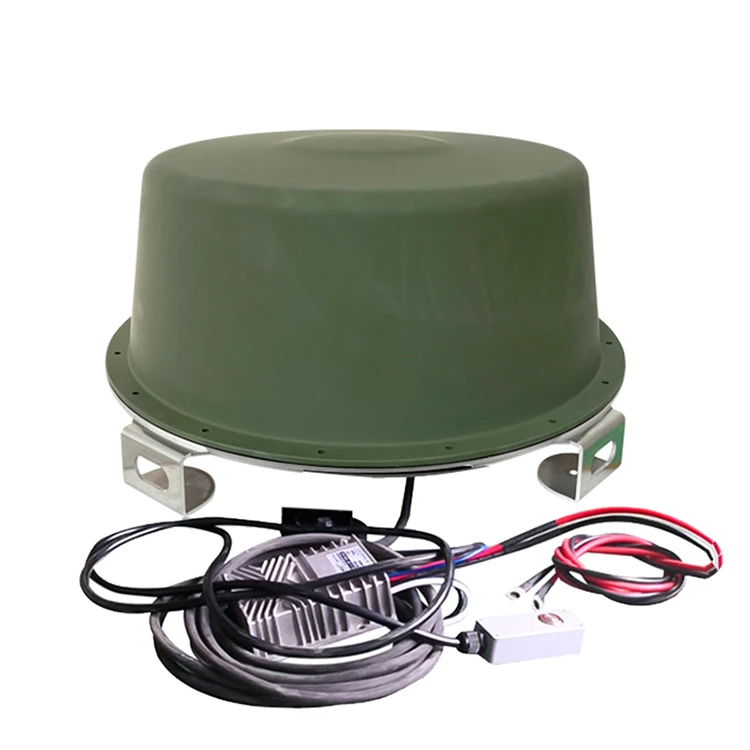
Our All - in - one Machine 6 Antennas High Power Vehicle Mount Anti FPV Drone System is another flagship product. It combines multiple functions, including drone detection, tracking, and jamming, in a single unit. This system also uses a combination of CAN and Wi - Fi communication protocols. The CAN bus is used for in - vehicle communication with the car's computer, while Wi - Fi is used for external communication and data sharing. This allows the system to access cloud - based resources and provide more comprehensive threat assessments.
Conclusion
In conclusion, the communication between a car anti - drone system and the car's computer is a complex but essential process. It enables the vehicle to detect and respond to drone threats effectively, enhancing the safety and security of the vehicle and its occupants. As a Car anti - drone supplier, we are committed to developing advanced anti - drone systems that can communicate seamlessly with a wide range of vehicle models. Our products are designed to meet the highest standards of performance, reliability, and security.

If you are interested in our car anti - drone systems and would like to discuss potential procurement opportunities, please feel free to reach out to us. We look forward to working with you to enhance the security of your vehicles.
References
- Bosch, Automotive Handbook, 7th edition.
- IEEE Transactions on Intelligent Transportation Systems, various issues related to vehicle communication and security.
- International Journal of Unmanned Systems Technology, articles on anti - drone technologies.