

Hey there! As a supplier of drone counters, I've been getting a lot of questions lately about how a drone counter's performance changes with altitude. So, I thought I'd take a deep dive into this topic and share some insights with you all.
First off, let's quickly understand what a drone counter is. A drone counter is a device that's designed to detect, track, and sometimes even neutralize unauthorized drones. It uses various technologies like radio frequency (RF) detection, radar, and electro - optical/infrared (EO/IR) sensors to do its job.
How Altitude Affects RF Detection
One of the most common ways drone counters detect drones is through RF detection. Drones communicate with their controllers using radio frequencies, and a drone counter can pick up these signals. But as the altitude of the drone increases, the RF signal strength that the drone counter receives decreases.
The reason behind this is the inverse - square law. In simple terms, the intensity of an RF signal is inversely proportional to the square of the distance from the source. So, if a drone doubles its altitude (and effectively its distance from the drone counter), the signal strength that the counter receives drops to one - fourth of its original value.
Let's say we have a drone flying at a low altitude of 100 meters, and our drone counter can detect it clearly. If that same drone climbs to 200 meters, the RF signal reaching the counter will be much weaker. This means that the drone counter might have a harder time accurately detecting and tracking the drone.

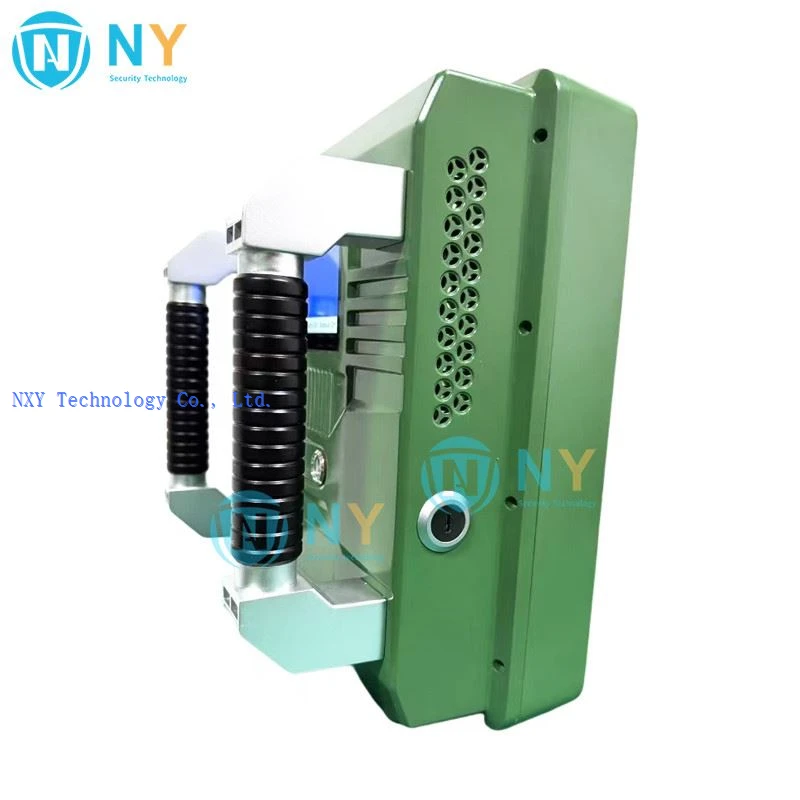
Some of our products, like the Portable Shield Mn - 5 Band Directional Antenna Anti Drone Jammer Shield Drone Signal Detector, are equipped with high - gain directional antennas. These antennas can help to some extent in compensating for the loss of signal strength at higher altitudes. They can focus on a specific direction where the drone is likely to be, amplifying the received RF signals and improving the detection range even when the drone is at a relatively high altitude.
Impact on Radar - Based Drone Counters
Radar is another technology used in drone counters. Radar works by sending out radio waves and then measuring the time it takes for the waves to bounce back from an object (in this case, the drone). As the altitude of the drone goes up, several factors come into play that affect the performance of the radar - based drone counter.
At higher altitudes, the radar beam has to travel a longer distance to reach the drone and then back to the counter. This longer travel distance means that the radar signal is more likely to be attenuated by the atmosphere. Atmospheric attenuation is caused by factors like water vapor, oxygen, and dust particles in the air. These elements can absorb or scatter the radar waves, reducing the strength of the returned signal.
Also, the radar cross - section (RCS) of the drone can change with altitude. The RCS is a measure of how detectable an object is by radar. Some drones might change their orientation or configuration as they climb, which can alter their RCS. For example, a drone might tilt its rotors or change its body position to maintain stability at higher altitudes, and this can make it less visible to the radar.
Our 8 Antenna Backpack Portable Anti Drone System FPV Signal Blocker FPV has a radar component that's been optimized to handle some of these altitude - related challenges. The multiple antennas can provide a more comprehensive view of the sky, increasing the chances of detecting a drone even when it's at a high altitude and its radar signature is weak.
Electro - Optical/Infrared (EO/IR) Sensors and Altitude
EO/IR sensors are great for visually identifying drones. They can capture images and videos of drones, allowing operators to confirm the presence of a drone and even get some details about its type and model.
However, as the altitude of the drone increases, the visual details that the EO/IR sensor can capture become less clear. The drone appears smaller in the field of view of the sensor, and it becomes more difficult to distinguish its features.
Also, the atmospheric conditions at higher altitudes can affect the performance of EO/IR sensors. There's more turbulence and less air density at high altitudes, which can cause the image captured by the sensor to be blurry. Additionally, the sun's position and the amount of light available can change with altitude, making it harder to get a clear image.
Our 8 Antennas High Power Vehicle Mount Anti Drone System comes with advanced EO/IR sensors. These sensors have high - resolution cameras and are equipped with image - processing algorithms that can enhance the captured images. This helps in getting a better view of the drone, even when it's flying at a relatively high altitude.
Other Considerations
Apart from the technical aspects related to detection technologies, there are other factors related to altitude that can impact the overall performance of a drone counter.
At higher altitudes, the environmental conditions can be harsher. There's less oxygen, lower temperatures, and higher wind speeds. These conditions can affect the physical components of the drone counter. For example, electronic components might not function as efficiently in cold temperatures, and strong winds can cause vibrations that can disrupt the operation of the sensors.
Also, the regulatory environment can vary depending on the altitude. In some areas, drones are restricted from flying above a certain altitude. So, the performance requirements of a drone counter might be different depending on whether it's designed to detect drones at low, medium, or high altitudes.
Conclusion and Call to Action
In conclusion, altitude has a significant impact on the performance of a drone counter. Whether it's the reduction in RF signal strength, the challenges faced by radar and EO/IR sensors, or the harsh environmental conditions at high altitudes, all these factors need to be considered when choosing a drone counter.
We, as a drone counter supplier, have a range of products that are designed to tackle these altitude - related challenges. Our products are constantly being updated and improved to provide the best possible performance in different altitude scenarios.
If you're in the market for a drone counter and want to learn more about how our products can meet your specific needs, especially in terms of altitude performance, we'd love to hear from you. Reach out to us to start a conversation about your requirements and how we can help you find the perfect drone counter solution.
References
- "Introduction to Radar Systems" by Merrill I. Skolnik
- "Radio Frequency Engineering" by Andrew J. Gan
- "Remote Sensing and Image Interpretation" by Thomas M. Lillesand, Ralph W. Kiefer, and Jonathan W. Chipman