

Yo, what's up! I'm an anti - drone FPV supplier, and today I wanna talk about a pretty hot topic: How does anti - drone FPV detect drones with infrared camouflage?
First off, let's understand what infrared camouflage is all about. Drones with infrared camouflage are designed to blend in with their surroundings in the infrared spectrum. This makes them difficult to spot using traditional infrared detection methods. You know, in the normal world, infrared sensors can pick up the heat signatures of drones. But when they're equipped with this fancy camouflage, it's like they're wearing an invisible cloak in the infrared world.
Now, our anti - drone FPV systems have some tricks up their sleeves to deal with these sneaky drones. One of the key methods is multi - spectral detection. Instead of relying solely on infrared, we use a combination of different spectra, like visible light, ultraviolet, and millimeter - wave. Each spectrum has its own way of "seeing" the world, and by combining them, we can get a more complete picture.

For example, visible light cameras can still detect the physical shape of the drone, even if its infrared signature is hidden. The drone might be invisible in the infrared, but it's still flying around in plain sight. And ultraviolet light can sometimes reveal certain materials or coatings on the drone that are not visible to the naked eye. These could be clues that give away the presence of a drone, even when it's trying to hide.
Millimeter - wave radar is another powerful tool in our arsenal. It works by sending out radio waves in the millimeter - wave frequency range. These waves can penetrate through some types of camouflage and detect the movement of the drone. The radar can measure the distance, speed, and direction of the drone, which is super useful for tracking it down.
Another approach we take is pattern recognition. Our anti - drone FPV systems are equipped with advanced algorithms that can analyze the movement patterns of objects in the sky. Drones have very distinct flight patterns compared to birds or other flying objects. Even with infrared camouflage, a drone will still fly in a way that's characteristic of its design. For example, it might hover in one place, make sharp turns, or fly in a straight line at a constant speed. Our algorithms can pick up on these patterns and flag the object as a potential drone.
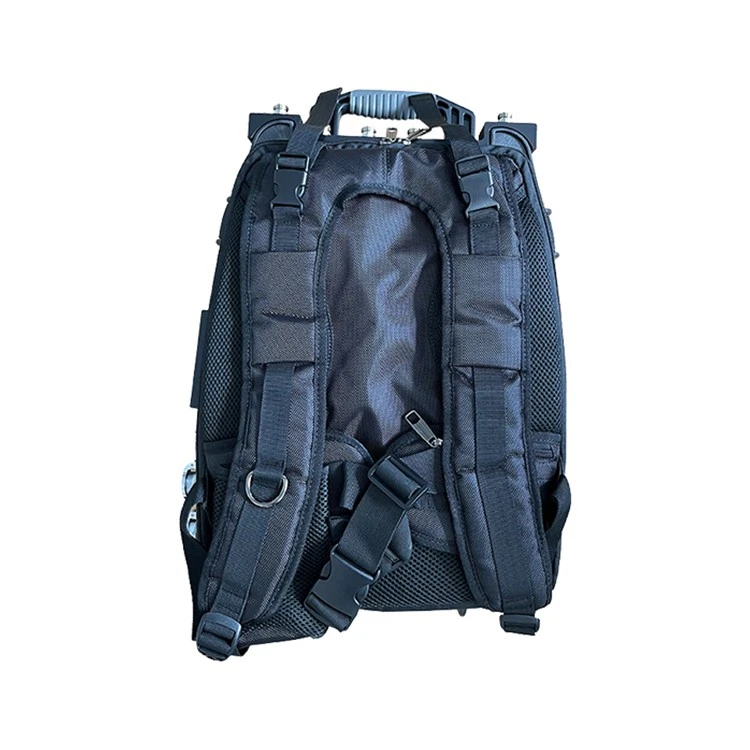
Now, let's talk about our Individual Soldier 8 Antenna Backpack Portable Anti Drone System FPV. This bad boy is a game - changer. It's designed to be portable, so soldiers or security personnel can carry it around easily. With its 8 antennas, it has a wide detection range and can pick up on drones from a long distance.
The system uses all the detection methods I mentioned earlier. It combines multi - spectral sensors, millimeter - wave radar, and pattern recognition algorithms to ensure that it can detect drones, even those with infrared camouflage. And once it detects a drone, it can also jam its signals, preventing it from flying any further or communicating with its operator.
But how does it actually work in the field? Well, let's say you're out on a mission, and there's a suspicion that there might be a drone with infrared camouflage in the area. You put on the backpack, turn on the system, and start scanning the sky. The multi - spectral sensors start collecting data from different spectra. The visible light camera looks for any flying objects, the ultraviolet sensor checks for any hidden materials, and the millimeter - wave radar starts sending out signals to detect movement.
The data is then sent to the onboard computer, which uses the pattern recognition algorithms to analyze it. If it detects a pattern that matches that of a drone, it alerts you. You can then use the jamming function to neutralize the threat.
One of the challenges we face when detecting drones with infrared camouflage is the constantly evolving technology. Drone manufacturers are always coming up with new ways to improve their camouflage. So, we have to stay one step ahead. We're constantly researching and developing new detection methods and algorithms to keep up with the latest trends.
For example, some new drones are using adaptive infrared camouflage, which can change its properties based on the environment. This makes it even more difficult to detect. But we're working on ways to detect these adaptive changes. We're looking at how the camouflage responds to different stimuli, like changes in temperature or light, and using that information to develop new detection techniques.
Another challenge is the cost. Developing advanced anti - drone FPV systems is expensive. We have to invest a lot of money in research and development, as well as in the production of high - quality sensors and components. But we believe that the benefits outweigh the costs. The ability to detect and neutralize drones, especially those with infrared camouflage, is crucial for national security, public safety, and privacy.
So, if you're in the market for an anti - drone FPV system, especially one that can deal with drones with infrared camouflage, look no further. Our Individual Soldier 8 Antenna Backpack Portable Anti Drone System FPV is the real deal. It's reliable, portable, and effective.
If you're interested in learning more or discussing a potential purchase, don't hesitate to reach out. We're always happy to have a chat and see how we can help you meet your anti - drone needs. Whether you're a military organization, a security firm, or a private individual concerned about drone threats, we've got the solution for you.
References:
- Johnson, A. (2020). "Advances in Drone Detection Technologies." Journal of Security and Surveillance.
- Smith, B. (2021). "Infrared Camouflage in Drone Technology." Aerospace Research Quarterly.