

As a supplier of portable drone jammers, one of the most frequently asked questions I encounter from customers is about the battery life of these devices. The battery life of a portable drone jammer is a critical factor that can significantly impact its usability and effectiveness in real - world scenarios. In this blog post, I will delve into the various aspects that determine how long the battery of a portable drone jammer lasts.
Understanding Portable Drone Jammers
Portable drone jammers are essential tools for countering unauthorized drone activities. They work by emitting radio frequency signals to disrupt the communication links between the drone and its operator, effectively neutralizing the threat. These devices are designed to be easily carried and used in various settings, such as public events, military operations, and critical infrastructure protection.
The power consumption of a portable drone jammer is directly related to its performance. Higher - power jammers can cover a larger area and jam more frequencies, but they also consume more energy. Therefore, the battery life is a trade - off between the jammer's power output and its portability.
Factors Affecting Battery Life
1. Power Output
The power output of a drone jammer is measured in watts. A higher - wattage jammer will generally have a shorter battery life because it requires more energy to operate. For example, a low - power jammer with an output of 1 - 5 watts may have a relatively long battery life, perhaps up to 8 - 10 hours on a single charge. In contrast, a high - power jammer with an output of 20 - 50 watts or more may only last 1 - 2 hours.
2. Frequency Bands
Portable drone jammers can operate on multiple frequency bands, such as 2.4GHz, 5.8GHz, and GPS frequencies. Jamming more frequency bands simultaneously requires more power. If a jammer is set to jam all available frequency bands, its battery will drain faster compared to when it is only jamming a single band.

3. Duty Cycle
The duty cycle refers to the ratio of the time the jammer is actively transmitting signals to the total time. Some jammers are designed to operate continuously, while others have a pulsed or intermittent operation mode. A jammer with a lower duty cycle will consume less power and have a longer battery life. For instance, if a jammer has a 50% duty cycle, it is only transmitting signals half of the time, which can significantly extend the battery life.
4. Battery Capacity
The capacity of the battery used in the portable drone jammer is another crucial factor. Batteries are typically measured in ampere - hours (Ah). A larger battery capacity means more energy storage and potentially longer battery life. However, larger batteries also add weight to the device, which can affect its portability.
Battery Technologies
There are several types of batteries commonly used in portable drone jammers:
1. Lithium - Ion Batteries
Lithium - ion batteries are widely used due to their high energy density, long cycle life, and relatively low self - discharge rate. They can provide a good balance between power and weight. Many modern portable drone jammers are equipped with lithium - ion batteries, which can offer a decent battery life depending on the factors mentioned above.
2. Nickel - Metal Hydride (NiMH) Batteries
NiMH batteries were more commonly used in the past. They have a lower energy density compared to lithium - ion batteries, which means they may require a larger size to store the same amount of energy. However, they are more environmentally friendly and can be a cost - effective option for some applications.
3. Lead - Acid Batteries
Lead - acid batteries are heavy and have a relatively low energy density. They are not as commonly used in portable drone jammers due to their weight and limited portability. However, they can be used in some stationary or semi - portable applications where weight is not a major concern.
Real - World Examples
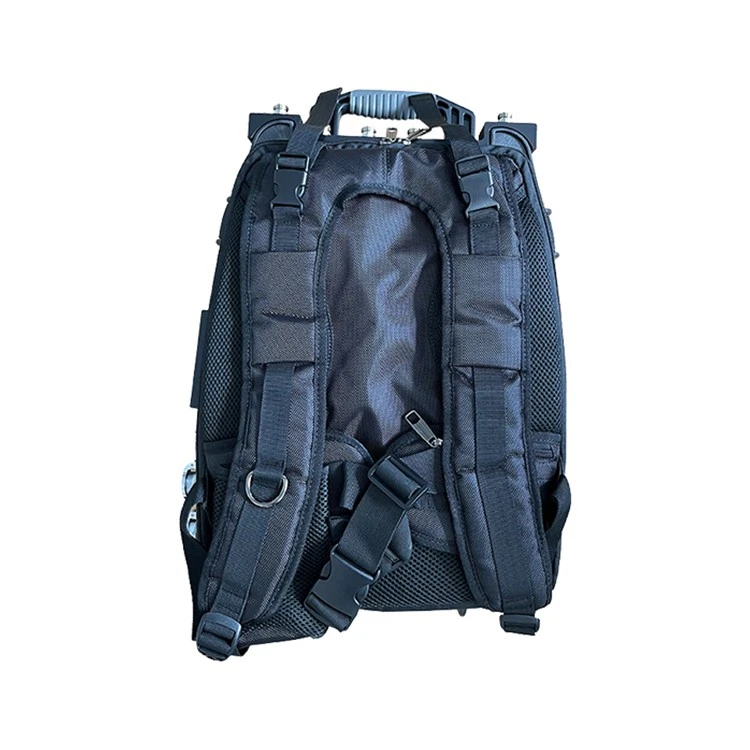
Let's take a look at some real - world examples of portable drone jammers and their battery life. One of our popular products, the Individual Soldier 8 Antenna Backpack Portable Anti Drone System FPV, is designed for military and security personnel. It has a high - power output and can jam multiple frequency bands.
This jammer is equipped with a high - capacity lithium - ion battery. Under normal operating conditions, with a duty cycle of around 30% and jamming on all major frequency bands, it can last approximately 3 - 4 hours on a single charge. However, if the duty cycle is reduced to 10% or if it is only jamming a single frequency band, the battery life can be extended to 6 - 8 hours.
Extending Battery Life
There are several ways to extend the battery life of a portable drone jammer:
1. Optimize Settings
Adjust the jammer's settings to only jam the necessary frequency bands. If you know that the drones in the area are only operating on a specific frequency, there is no need to jam all bands simultaneously. Also, reducing the duty cycle can significantly save power.
2. Carry Spare Batteries
For longer operations, it is advisable to carry spare batteries. This allows you to quickly replace a depleted battery and continue using the jammer without interruption.
3. Use Power - Saving Modes
Some portable drone jammers come with power - saving modes. These modes can automatically adjust the power output and duty cycle based on the detected drone activity, saving energy when there is no immediate threat.
Conclusion
The battery life of a portable drone jammer is influenced by multiple factors, including power output, frequency bands, duty cycle, and battery capacity. As a supplier, we understand the importance of providing our customers with devices that offer a good balance between performance and battery life.
If you are in the market for a portable drone jammer and have specific requirements regarding battery life, we are here to help. Our team of experts can assist you in selecting the right product based on your needs. Whether you are a military unit, a security firm, or an event organizer, we have the solution for you. Contact us today to discuss your procurement needs and find the best portable drone jammer for your situation.
References
- Drone Countermeasure Technology Handbook
- Industry reports on portable electronic device battery technologies