

As a supplier of portable 4G jammers, I often get inquiries about the materials used in these devices. Understanding the components is crucial for customers who want to make an informed decision about their purchase. In this blog post, I'll delve into the various materials and components that go into making a high - quality portable 4G jammer.
1. RF (Radio Frequency) Modules
The heart of any 4G jammer is its RF module. These modules are responsible for generating and transmitting the radio frequency signals that disrupt the 4G communication between mobile phones and base stations.
Semiconductor Materials
RF modules typically use semiconductor materials such as gallium arsenide (GaAs) and silicon germanium (SiGe). GaAs is favored for its high electron mobility, which allows for high - frequency operation and efficient signal generation. It can handle high power levels while maintaining low noise, making it ideal for jammer applications where strong and clear signals are required.
SiGe, on the other hand, combines the advantages of silicon (low cost and good integration capabilities) with the high - frequency performance of germanium. It offers a cost - effective alternative to GaAs in some cases, especially for less power - hungry RF modules.
Printed Circuit Boards (PCBs)
The RF modules are mounted on printed circuit boards. These PCBs are usually made of fiberglass - reinforced epoxy resin, commonly known as FR - 4. FR - 4 provides good mechanical stability, electrical insulation, and heat resistance. The copper traces on the PCB are used to connect different components of the RF module, ensuring proper signal flow and power distribution.
2. Antennas
Antennas are essential for radiating the jamming signals into the surrounding environment. They come in different types and are made from various materials.
Metal Alloys
Most antennas in portable 4G jammers are made from metal alloys such as aluminum or copper. Aluminum is lightweight, corrosion - resistant, and has good electrical conductivity. It is often used for the outer structure of the antenna, providing a durable and efficient radiating element.
Copper, with its excellent electrical conductivity, is also a popular choice for antenna construction. It can be used in the form of wires or sheets to create the antenna's conductive path. Some high - performance antennas may use a combination of copper and other metals to optimize their performance.
Dielectric Materials
In addition to metals, antennas may also incorporate dielectric materials. These materials are used to support the antenna structure and can affect its electrical properties. Common dielectric materials include ceramics and plastics. Ceramics offer high dielectric constant and low loss, which can help in miniaturizing the antenna while maintaining its performance. Plastics, on the other hand, are lightweight and easy to mold, making them suitable for antenna enclosures.
3. Power Supply Components
A portable 4G jammer needs a reliable power supply to operate. The power supply components include batteries, power management circuits, and connectors.
Batteries
Lithium - ion batteries are the most commonly used power source for portable 4G jammers. They offer high energy density, long cycle life, and relatively low self - discharge rate. Lithium - ion batteries are available in different capacities and voltages, allowing for customization based on the power requirements of the jammer.
Power Management Circuits
Power management circuits are responsible for regulating the voltage and current supplied to the different components of the jammer. These circuits are typically made of integrated circuits (ICs) and passive components such as resistors, capacitors, and inductors. The ICs are usually made of silicon, which is a widely used semiconductor material in electronics.
Connectors
Connectors are used to connect the battery, power management circuits, and other components of the jammer. They are typically made of metals such as brass or stainless steel, which provide good electrical conductivity and mechanical strength.
4. Enclosure
The enclosure of a portable 4G jammer serves several purposes, including protecting the internal components, providing a user - friendly interface, and ensuring electromagnetic compatibility (EMC).
Plastic Materials
Most enclosures are made of plastic materials such as acrylonitrile butadiene styrene (ABS) or polycarbonate (PC). ABS is a popular choice due to its good impact resistance, ease of processing, and low cost. It can be molded into various shapes, allowing for the design of compact and ergonomic jammers.
PC, on the other hand, offers high transparency, excellent heat resistance, and good mechanical strength. It is often used in combination with ABS or other plastics to create enclosures with enhanced properties.

Metal Shielding
To ensure EMC, some enclosures may incorporate metal shielding. This shielding is usually made of thin metal sheets, such as aluminum or steel, which are placed inside the enclosure to block electromagnetic interference (EMI) from the external environment and prevent the jammer's own signals from leaking out.
High - Power Options
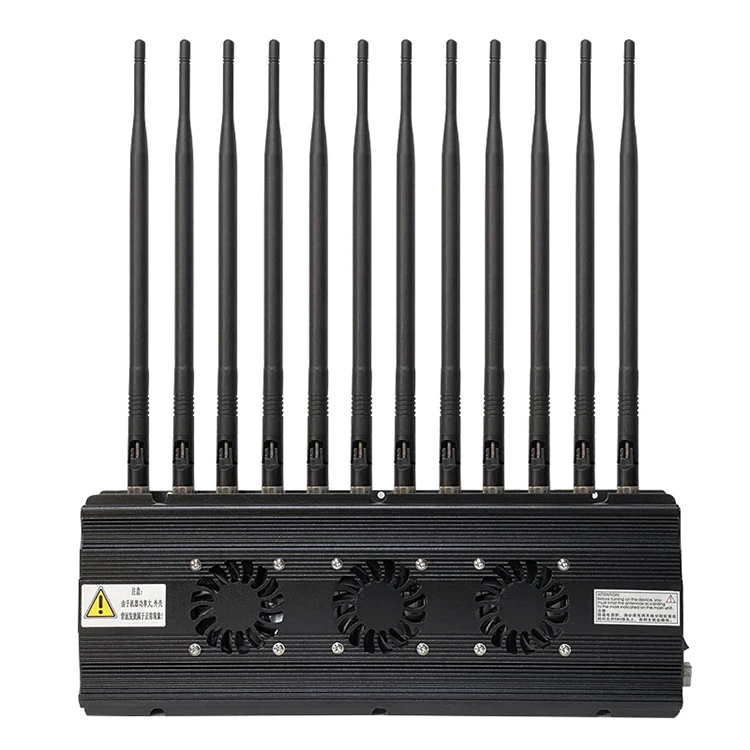
If you are looking for high - power portable 4G jammers, we offer two great options. The Mobile Phone Signal Jammer High Power 12 Antennas High Power Phone Signal Jammer is equipped with 12 antennas, providing a wide coverage area and strong jamming performance. It is suitable for large - scale applications where a high level of signal disruption is required.
Another option is the Mobile Phone Signal Jammer High Power 8 Antennas High Power Phone Signal Jammer. With 8 antennas, it offers a balance between power and portability. It is ideal for medium - sized areas where a reliable and effective jamming solution is needed.
Conclusion
In conclusion, a portable 4G jammer is a complex device that consists of various materials and components. From the RF modules and antennas to the power supply components and enclosure, each part plays a crucial role in its performance. By understanding the materials used in these devices, customers can better evaluate their options and choose the jammer that best suits their needs.
If you are interested in purchasing a portable 4G jammer or have any questions about our products, please feel free to contact us for a detailed discussion. We are committed to providing high - quality products and excellent customer service.
References
- "RF and Microwave Engineering Handbook" by David M. Pozar
- "Antenna Theory: Analysis and Design" by Constantine A. Balanis
- "Power Electronics: Converters, Applications, and Design" by Ned Mohan, Tore M. Undeland, and William P. Robbins