

Hey there! As a supplier of portable drone jammers, I often get asked about the power requirements for these nifty devices. In this blog post, I'm gonna break down everything you need to know about the power needs of a portable drone jammer.
First off, let's understand what a portable drone jammer does. It's a device designed to disrupt the communication between a drone and its operator. This is usually done by transmitting radio frequency signals on the same frequencies that the drone uses for control and data transmission. By doing so, the jammer can make the drone lose control, either forcing it to land or return to its point of origin.
Now, the power requirements of a portable drone jammer depend on several factors. One of the most important factors is the range of the jammer. The farther you want the jammer to work, the more power it's gonna need. This is because the radio signals need to be strong enough to reach the drone over a greater distance. For example, if you're looking to jam drones in a small, confined area like a backyard or a small building, you might be able to get away with a low - power jammer. But if you need to cover a large open area like a stadium or a military base, you'll definitely need a high - power device.
Another factor that affects the power requirements is the number of frequency bands the jammer needs to cover. Drones operate on various frequencies, including 2.4 GHz, 5.8 GHz, and sometimes even other frequencies for GPS and telemetry. A jammer that can cover multiple frequency bands simultaneously will require more power than one that only covers a single band. This is because the jammer has to generate and transmit signals on multiple frequencies at the same time.
The type of antenna used in the jammer also plays a role in power requirements. Antennas come in different shapes and sizes, and some are more efficient than others at transmitting radio signals. A high - gain antenna can focus the radio energy in a specific direction, allowing the jammer to achieve a greater range with less power. On the other hand, a low - gain antenna might spread the energy more evenly but require more power to achieve the same range.
Let's talk about the different types of power sources for portable drone jammers. The most common power source is a battery. Batteries are great because they make the jammer truly portable. You can take it with you wherever you go without having to worry about finding a power outlet. However, the battery life of a portable drone jammer can vary widely depending on its power consumption. A low - power jammer might run for several hours on a single charge, while a high - power one might only last for an hour or less.
Some portable drone jammers also have the option to be powered by an external power source, such as a vehicle's cigarette lighter socket or a power bank. This can be useful if you need to use the jammer for an extended period of time and don't want to rely on the internal battery.

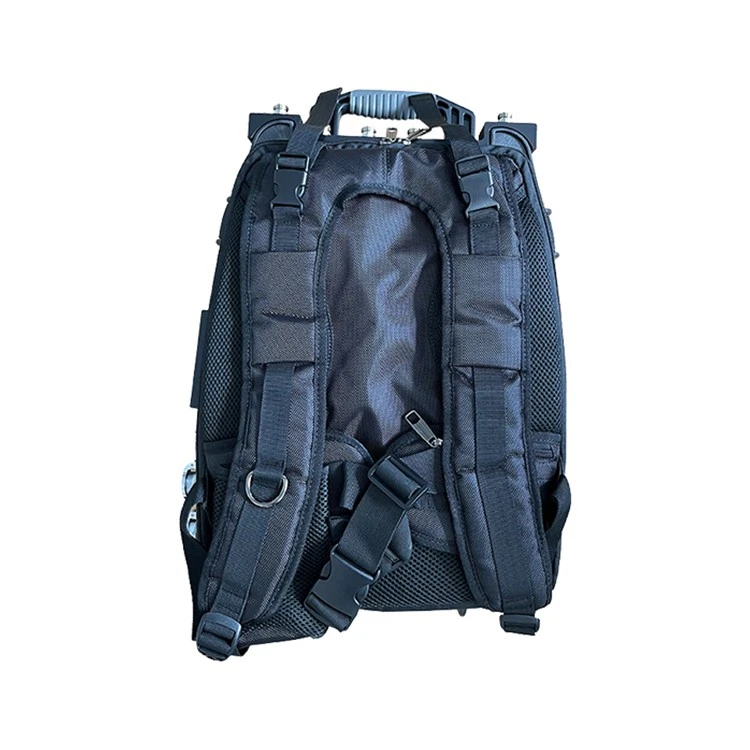
Now, let's take a look at an example of a portable drone jammer. Check out our Individual Soldier 8 Antenna Backpack Portable Anti Drone System FPV. This bad boy is designed for individual soldiers or security personnel who need to take down drones on the go. It has eight antennas, which allows it to cover multiple frequency bands and provide a wide range of jamming capabilities.
The power requirements for this system are carefully balanced to ensure both portability and effectiveness. It uses a high - capacity battery that can provide several hours of continuous operation, depending on the power settings. The eight - antenna design also helps to maximize the efficiency of the radio signal transmission, reducing the overall power consumption while still achieving a good range.
If you're in the market for a portable drone jammer, it's important to consider your specific needs. Think about the range you need, the frequency bands you want to cover, and how long you need the jammer to operate. This will help you choose a device with the right power requirements.
For instance, if you're a security guard at a small event, a low - power, single - band jammer might be sufficient. It'll be lightweight, easy to carry around, and won't drain the battery too quickly. But if you're a military or law enforcement officer working in a large - scale operation, you'll probably need a high - power, multi - band jammer that can cover a wide area.
In conclusion, understanding the power requirements of a portable drone jammer is crucial for making an informed purchase. Whether you're looking for a simple, low - power device or a high - end, multi - band jammer, there's a solution out there for you. And if you have any questions or need help choosing the right portable drone jammer for your needs, don't hesitate to reach out. We're here to help you make the best decision and keep your airspace safe from unwanted drones.
If you're interested in purchasing a portable drone jammer or want to learn more about our products, feel free to contact us for a procurement discussion. We'll be happy to provide you with all the information you need and answer any questions you might have.
References
- Radio Frequency Basics: Understanding the principles of radio frequency transmission and how it relates to drone jamming.
- Drone Technology Guides: Information on the frequencies and communication protocols used by different types of drones.