

Hey there! As a supplier of portable drone jammers, I often get asked about different technical aspects of these nifty devices. One question that pops up quite a bit is, "What is the beam angle of a portable drone jammer?" Well, let's dive right in and break it down.
Understanding the Basics of Beam Angle
First things first, what exactly is a beam angle? In the context of a portable drone jammer, the beam angle refers to the spread of the jamming signal. Think of it like a flashlight beam. When you shine a flashlight, it doesn't just go in a single, straight line. Instead, it spreads out in a cone - shaped pattern. The angle at which this spread occurs is the beam angle.
For a portable drone jammer, the beam angle determines the area over which the jamming signal can effectively disrupt the communication and control signals of drones. A narrow beam angle means the jamming signal is concentrated within a smaller area. This can be useful in situations where you want to precisely target a specific drone or a small group of drones in a particular location. On the other hand, a wide beam angle means the jamming signal covers a larger area. This is great for scenarios where you need to protect a broader space, like a large public event or a military base perimeter.
Narrow Beam Angle: Precision Jamming
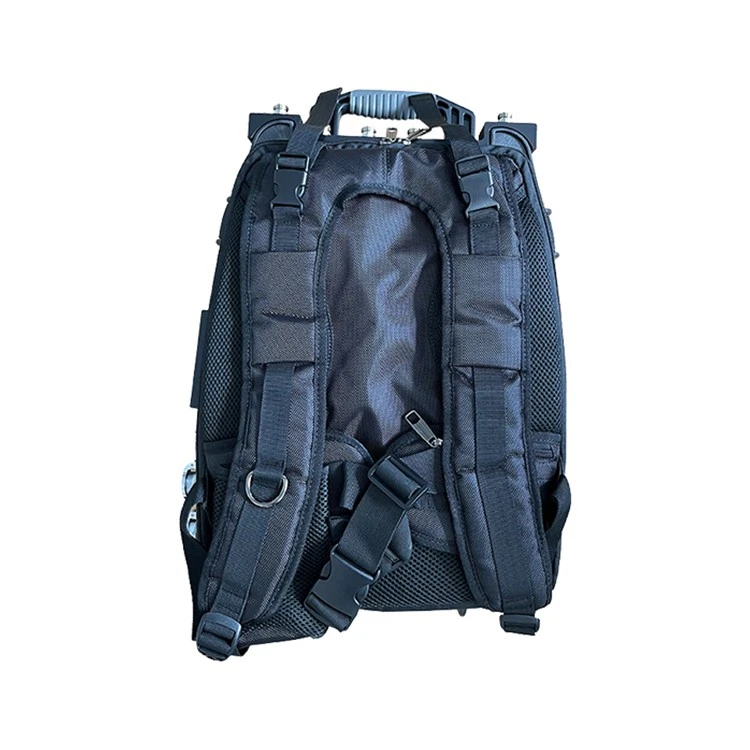
Let's start with the narrow beam angle. Our Individual Soldier 8 Antenna Backpack Portable Anti Drone System FPV is a prime example of a device that can offer relatively narrow beam angles in its design.
A narrow beam angle provides high - precision jamming. You can think of it as a sniper shot. When you're dealing with a specific threat, say a drone flying over a sensitive government building, you don't want to affect other areas unnecessarily. A narrow beam allows you to focus the jamming power directly on the targeted drone. This significantly reduces the chances of interfering with other nearby electronic devices or communication systems.
However, there are also some limitations. Since the coverage area is small, you need to have a good line - of - sight to the target drone. If the drone moves out of the narrow beam area, the jamming effect will be lost. Additionally, you may need to constantly adjust the direction of the jammer to keep the drone within the beam.
Wide Beam Angle: Area Coverage
Now, let's talk about wide beam angles. There are times when you need to protect a large area, like an airport or a sports stadium. In these cases, a wide - beam portable drone jammer is your best friend.
A wide beam angle spreads the jamming signal over a large area, similar to a floodlight illuminating a big room. This means that you can cover multiple potential drone entry points without having to constantly reposition the jammer. It provides a more comprehensive defense against drones that may be approaching from different directions.
But it's not all roses. With a wide - beam angle, the intensity of the jamming signal per unit area is lower compared to a narrow - beam jammer. This means that the effective range of the jammer may be reduced. Also, there's a higher risk of interfering with other electronic devices in the vicinity, such as cell phones or Wi - Fi routers, because the signal spreads over a larger area.
Factors Affecting Beam Angle
Several factors can influence the beam angle of a portable drone jammer. One of the main factors is the antenna design. Different types of antennas, such as monopole, dipole, or directional antennas, can produce different beam angles. For example, directional antennas are typically used to create narrow beam angles, while omnidirectional antennas can provide a more wide - spread signal, albeit with less intensity in a particular direction.
The frequency of the jamming signal also plays a role. Higher - frequency signals tend to have a more focused beam, resulting in a narrower beam angle. Lower - frequency signals, on the other hand, can spread out more easily, leading to a wider beam angle.
The power output of the jammer is another factor. A more powerful jammer can maintain a stronger signal over a wider area, allowing for either a wider beam angle or a more effective narrow - beam jamming at a greater distance.
Choosing the Right Beam Angle for Your Needs
As a supplier, I always tell my customers that choosing the right beam angle depends on their specific requirements. If you're an individual soldier on a mission where you need to take out a single, specific drone threat, a narrow - beam jammer like the Individual Soldier 8 Antenna Backpack Portable Anti Drone System FPV might be the perfect fit. It gives you the precision you need to neutralize the threat without causing unnecessary disruptions.

On the other hand, if you're in charge of security at a large - scale event, a wide - beam jammer would be more suitable. It can cover the entire event area and protect against drones approaching from different directions.
It's also important to consider the environment in which the jammer will be used. In an urban area with a lot of buildings and electronic interference, a narrow - beam jammer may be more effective as it can be targeted precisely to avoid interference with other systems. In an open rural area, a wide - beam jammer can provide broader protection.
Conclusion and Call to Action
So, there you have it! The beam angle of a portable drone jammer is a crucial factor that can determine its effectiveness in different scenarios. Whether you need precision jamming or wide - area coverage, we have the right solution for you.
If you're still not sure which beam angle or which portable drone jammer is best for your needs, don't worry! We're here to help. Our team of experts can provide you with personalized advice based on your specific requirements. Just reach out to us, and let's start a conversation about how we can help you protect your space from unwanted drones. Whether it's for military, security, or civilian use, we've got you covered.
References
- Drone Jamming Technology: Principles and Applications - A comprehensive study on the technology behind drone jammers.
- Antenna Engineering Handbook - Provides in - depth information on antenna design and its impact on signal beam angles.