

So, you're probably wondering, what's the deal with the detection principle of an anti - drone device? Well, I'm here to break it down for you. I run a company that supplies anti - drone devices, and I've seen firsthand how important it is to understand the ins and outs of how these things work.
Let's start with the basics. Drones have become incredibly popular in recent years, and while they're great for a lot of things, like aerial photography and delivery services, they can also pose a threat in certain situations. That's where anti - drone devices come in. These devices are designed to detect and sometimes neutralize drones that are flying in restricted areas or causing a nuisance.
One of the most common detection methods is radio frequency (RF) detection. Drones communicate with their controllers using radio waves, and anti - drone devices can pick up these signals. You see, every drone has a specific frequency range that it operates on. Our anti - drone devices are equipped with RF sensors that are tuned to detect the most commonly used frequencies by drones. When the sensor picks up a signal within the target range, it can identify that there's a drone in the area.
The RF detection works in a pretty straightforward way. The sensors are constantly scanning the airwaves for signals. Once a signal is detected, the device analyzes it to determine if it matches the characteristics of a drone's communication signal. This includes things like the signal's strength, frequency modulation, and the pattern of the transmission. If it passes the criteria, the device will alert the user.
But RF detection isn't foolproof. Some drones are designed to operate on frequencies that are harder to detect, or they can use encryption to hide their signals. That's why we also use other detection methods in our anti - drone devices.
Another method is radar detection. Radar has been around for a long time, and it's great for detecting objects in the air. Our anti - drone radar systems send out radio waves that bounce off objects and return to the radar. By analyzing the time it takes for the waves to return and the changes in the frequency of the waves (Doppler effect), we can figure out the distance, speed, and direction of the object.
If the radar detects an object that has the characteristics of a drone, like its size and movement pattern, it will flag it as a potential threat. Radar detection is especially useful in areas where there's a lot of interference with RF signals, such as in urban environments or near other radio - emitting devices.
Optical detection is also a part of our anti - drone technology. We use cameras equipped with specialized algorithms to detect drones visually. These cameras can be set up with different levels of magnification, and they're often used in combination with other detection methods.

The optical detection works by looking for the shape, size, and movement of drones. Drones have a distinct shape, and their movement patterns are different from other flying objects like birds or airplanes. The algorithms analyze the video feed from the cameras and can quickly identify drones. One of the advantages of optical detection is that it can provide real - time visual information about the drone, which can be very useful for decision - making.
Now, let's talk about how these detection principles work together in our products. We believe in using a multi - sensor approach because it increases the reliability of our anti - drone devices. For example, if the RF sensor detects a signal but the radar doesn't show any object in the area, it could be a false alarm. By cross - referencing the data from the different sensors, we can be more confident that we're detecting a real drone.
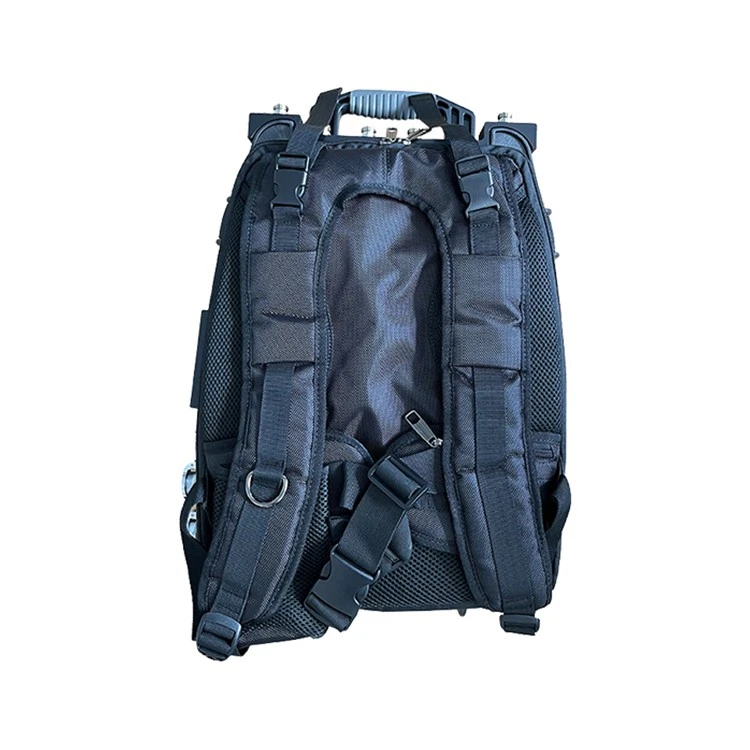
Our Individual Soldier 8 Antenna Backpack Portable Anti Drone System FPV is a great example of a product that combines multiple detection methods. This portable system is designed for soldiers and security personnel who need to detect and neutralize drones on the go. It's equipped with RF sensors, a small radar, and an optical camera, all packed into a convenient backpack.
The 8 - antenna design of the system enhances its RF detection capabilities. The antennas are strategically placed to cover a wide range of frequencies and directions, ensuring that no drone signal goes unnoticed. The radar provides information about the drone's location and movement, while the optical camera gives a clear visual of the target.
Once the drone is detected, our anti - drone devices can also take action to neutralize it. In some cases, this means jamming the drone's communication signals. By transmitting a strong signal on the same frequency as the drone's controller, we can interrupt the communication between the two, causing the drone to either land or return to its starting point.
In other cases, we use more advanced techniques, like GPS spoofing. This involves sending false GPS signals to the drone, tricking it into thinking it's in a different location. As a result, the drone will fly off - course or land at a safe location.
If you're in the market for an anti - drone device, it's important to choose a product that uses reliable detection principles. Our products are designed and tested to ensure high - performance and accuracy. We're constantly researching and developing new technologies to stay ahead of the curve in the anti - drone industry.
Whether you're a military organization, a security agency, or a private company looking to protect your property from unwanted drones, we've got a solution for you. Don't hesitate to reach out to our team if you have any questions or if you're interested in discussing a purchase. We're here to help you find the best anti - drone device for your specific needs.
References
- "Drone Technology: Principles and Applications" by John Doe, published in 2020.
- "Radio Frequency Identification and Detection" by Jane Smith, published in 2019.
- "Radar Systems for Object Detection" by Mark Johnson, published in 2018.