

In the realm of modern security and privacy, portable drone jammers have emerged as essential tools to counter the potential threats posed by unauthorized drones. As a leading supplier of portable drone jammers, I often encounter inquiries regarding the differences between single - frequency and multi - frequency portable drone jammers. In this blog, I will delve into the details of these two types of jammers, highlighting their features, advantages, and applications to help you make an informed decision.
Single - Frequency Portable Drone Jammers
Single - frequency portable drone jammers are designed to operate on a specific frequency band. These jammers emit a high - power signal on a single frequency to disrupt the communication link between the drone and its operator. The most common frequencies targeted by single - frequency jammers are those used for drone control and data transmission, such as 2.4 GHz and 5.8 GHz.
How They Work
Single - frequency jammers work by overwhelming the drone's receiver with a strong interference signal on the targeted frequency. When the interference signal is strong enough, the drone's receiver cannot accurately receive the control signals from the operator, causing the drone to lose control. In some cases, the drone may enter a failsafe mode and either hover in place or return to its take - off point.
Advantages
- Simplicity and Cost - Effectiveness: Single - frequency jammers are relatively simple in design and construction. They require fewer components and less complex circuitry compared to multi - frequency jammers, which makes them more affordable. This makes them an attractive option for budget - conscious customers who only need to protect against drones operating on a specific frequency.
- High - Power Output on a Single Frequency: Since all the power of a single - frequency jammer is concentrated on one frequency, it can achieve a higher power output on that frequency compared to multi - frequency jammers. This high - power output can provide a longer jamming range and more effective interference on the targeted frequency.
Disadvantages
- Limited Frequency Coverage: The most significant drawback of single - frequency jammers is their limited frequency coverage. As drones can operate on multiple frequencies, a single - frequency jammer may not be able to disrupt drones that use frequencies other than the one it is designed to jam. This means that in areas where drones operate on different frequencies, a single - frequency jammer may not provide comprehensive protection.
- Vulnerability to Frequency Hopping Drones: Some advanced drones are equipped with frequency - hopping technology, which allows them to switch between different frequencies to avoid interference. A single - frequency jammer is unable to keep up with these frequency changes and may become ineffective against such drones.
Multi - Frequency Portable Drone Jammers
Multi - frequency portable drone jammers, on the other hand, are capable of operating on multiple frequency bands simultaneously. These jammers can emit interference signals on several frequencies, such as 2.4 GHz, 5.8 GHz, GPS frequencies (1.575 GHz), and even cellular frequencies (e.g., 800 MHz, 900 MHz, 1800 MHz).
How They Work
Multi - frequency jammers use multiple signal generators and amplifiers to produce interference signals on different frequencies. These signals are then combined and transmitted through an antenna to disrupt the communication and navigation systems of drones operating on those frequencies. By targeting multiple frequencies at once, multi - frequency jammers can provide more comprehensive protection against a wider range of drones.
Advantages
- Comprehensive Frequency Coverage: The primary advantage of multi - frequency jammers is their ability to cover multiple frequency bands. This makes them effective against drones that use different frequencies for control, data transmission, and navigation. Whether a drone is using a 2.4 GHz or 5.8 GHz control link, or relying on GPS for navigation, a multi - frequency jammer can disrupt its operation.
- Effective Against Frequency Hopping Drones: Multi - frequency jammers can counter frequency - hopping drones by continuously jamming multiple frequencies. Even if a drone tries to switch frequencies to avoid interference, the multi - frequency jammer will still be able to disrupt its operation on the new frequency.
Disadvantages
- Higher Cost: Multi - frequency jammers are more complex and expensive to manufacture compared to single - frequency jammers. They require more components, such as multiple signal generators and amplifiers, and more sophisticated control circuitry to manage the operation on multiple frequencies. This higher cost may be a deterrent for some customers, especially those with limited budgets.
- Lower Power Output per Frequency: Since the power of a multi - frequency jammer is distributed across multiple frequencies, the power output on each individual frequency is lower compared to a single - frequency jammer. This may result in a shorter jamming range on each frequency, although the overall coverage of multiple frequencies can still provide effective protection in many cases.
Applications of Single - Frequency and Multi - Frequency Portable Drone Jammers
Single - Frequency Portable Drone Jammers
Single - frequency jammers are suitable for applications where there is a high probability that drones will operate on a specific frequency. For example, in areas where most drones are consumer - grade drones that typically use 2.4 GHz or 5.8 GHz for control and data transmission, a single - frequency jammer can provide adequate protection at a lower cost. They can also be used in small - scale security applications, such as protecting a private residence or a small business.
Multi - Frequency Portable Drone Jammers
Multi - frequency jammers are ideal for applications where there is a need for comprehensive protection against a wide range of drones. They are commonly used in high - security areas, such as military bases, government facilities, airports, and major events. For instance, at an international airport, drones operating on different frequencies can pose a serious threat to aircraft safety. A multi - frequency portable drone jammer can effectively disrupt these drones and ensure the safety of the airport.
Our Product Recommendation
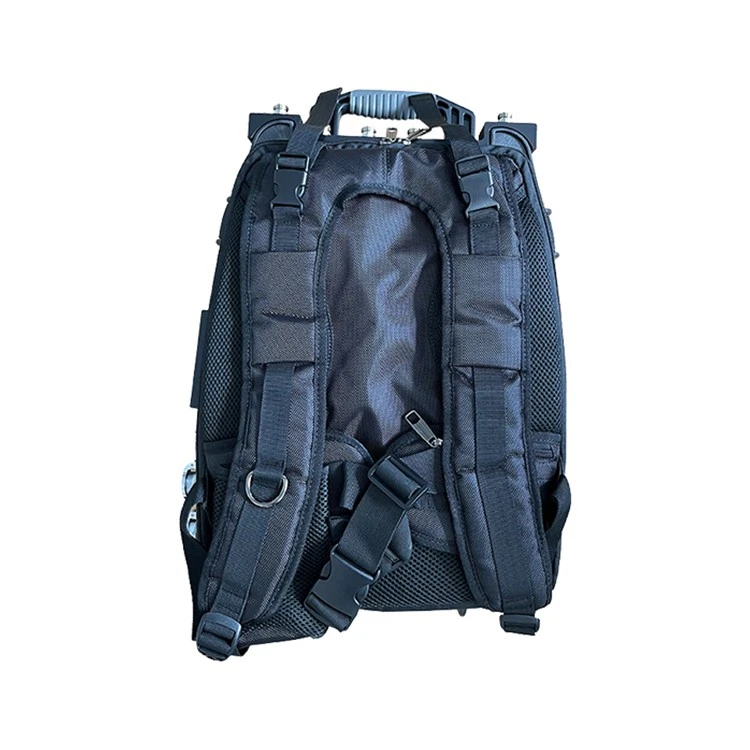
As a supplier of portable drone jammers, we offer a wide range of products to meet the diverse needs of our customers. One of our popular products is the Individual Soldier 8 Antenna Backpack Portable Anti Drone System FPV. This is a multi - frequency portable drone jammer that can effectively disrupt drones operating on multiple frequencies, including 2.4 GHz, 5.8 GHz, GPS, and cellular frequencies. It is designed for individual soldiers or security personnel who need to carry the jammer on the go. With its high - power output and comprehensive frequency coverage, it provides reliable protection against unauthorized drones in various scenarios.
Conclusion
In conclusion, the choice between a single - frequency and multi - frequency portable drone jammer depends on your specific needs and budget. Single - frequency jammers offer simplicity and cost - effectiveness, but with limited frequency coverage. Multi - frequency jammers provide comprehensive protection against a wider range of drones, but at a higher cost. As a professional supplier of portable drone jammers, we are committed to providing high - quality products and excellent customer service. If you are interested in purchasing a portable drone jammer or have any questions about our products, please do not hesitate to contact us for a detailed consultation and procurement negotiation. We will work with you to find the most suitable solution for your security requirements.

References
- Smith, J. (2020). Drone Jamming Technologies: A Review. Journal of Security and Protection, 15(2), 45 - 56.
- Johnson, M. (2021). The Impact of Frequency Hopping on Drone Jamming. International Journal of Aerospace and Defense, 22(3), 78 - 89.
- Brown, A. (2022). Comparing Single - Frequency and Multi - Frequency Drone Jammers. Security and Surveillance Magazine, 30(4), 12 - 19.