

In the modern era, the demand for portable 4G jammers has been on the rise, especially in environments where controlling mobile phone signals is necessary, such as exam halls, confidential meeting rooms, and military facilities. One crucial aspect that often gets overlooked but is of utmost importance is the heat dissipation of these devices. As a supplier of portable 4G jammers, I am well - versed in the significance of effective heat dissipation and its impact on the performance and lifespan of these products.
The Basics of Heat Generation in Portable 4G Jammers
Portable 4G jammers work by emitting radio frequency signals that interfere with the normal communication between mobile phones and base stations. This process involves the operation of high - power transmitters and electronic components. When electric current passes through these components, resistance is encountered, and according to the Joule's law of heating (Q = I²Rt, where Q is the heat generated, I is the current, R is the resistance, and t is the time), heat is produced.
For instance, the power amplifiers in a portable 4G jammer are responsible for boosting the signal strength to a level that can effectively block the 4G signals. These amplifiers typically consume a significant amount of power, and a large portion of this power is converted into heat. Additionally, other components like the microcontrollers, oscillators, and filters also generate heat during their normal operation.
Consequences of Poor Heat Dissipation
If a portable 4G jammer does not have an efficient heat dissipation system, several negative consequences can occur. Firstly, excessive heat can cause the electronic components to overheat. When components reach high temperatures, their performance can degrade significantly. For example, the gain of a power amplifier may decrease, leading to a reduction in the jamming radius. The frequency stability of oscillators can also be affected, resulting in inaccurate signal generation and potentially ineffective jamming.
Secondly, long - term exposure to high temperatures can shorten the lifespan of the components. Electronic components are designed to operate within a certain temperature range. When this range is exceeded, the internal structure of the components can be damaged, leading to premature failure. This means that the jammer may need to be replaced more frequently, which increases the cost for the end - user.
Finally, overheating can pose a safety risk. In extreme cases, the high temperature can cause the plastic casing of the jammer to melt or even catch fire. This not only endangers the users but also violates safety regulations in many regions.
Common Heat Dissipation Methods in Portable 4G Jammers
There are several methods commonly used to dissipate heat in portable 4G jammers.
Heat Sinks
Heat sinks are one of the most widely used heat dissipation devices. They are typically made of materials with high thermal conductivity, such as aluminum or copper. A heat sink works by increasing the surface area of the component it is attached to. The heat generated by the component is transferred to the heat sink, and then dissipated into the surrounding air through convection.

In a portable 4G jammer, heat sinks are usually attached to the power amplifiers and other high - power components. The design of the heat sink is crucial for its effectiveness. Factors such as the fin density, fin height, and material thickness all affect the heat transfer efficiency. For example, a heat sink with a higher fin density can provide more surface area for heat dissipation, but it may also impede the airflow, which can reduce the convection efficiency.
Fans
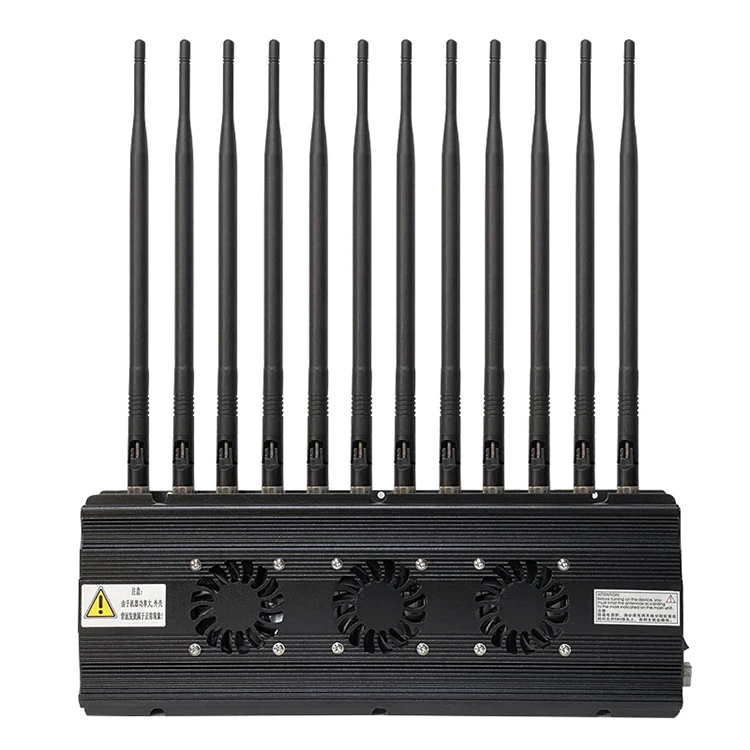
Fans are another important heat dissipation component. They work by forcing air to flow over the heat - generating components or heat sinks. This increases the rate of heat transfer from the components to the air. In a portable 4G jammer, small, low - power fans are often used to ensure that the device remains portable.
The placement of the fans is critical for optimal heat dissipation. They should be positioned in a way that maximizes the airflow across the heat - generating components. For example, some jammers have fans placed at the intake and exhaust ports to create a continuous flow of air through the device.
Thermal Pads and Greases
Thermal pads and greases are used to improve the thermal contact between the heat - generating components and the heat sinks. They fill in the microscopic gaps between the two surfaces, which reduces the thermal resistance and allows for more efficient heat transfer.
Thermal pads are pre - cut sheets of a soft, thermally conductive material. They are easy to install and can provide a good thermal connection. Thermal greases, on the other hand, are pastes that are applied between the component and the heat sink. They can conform to the surface irregularities better than thermal pads, resulting in even lower thermal resistance.
Our Company's Approach to Heat Dissipation
As a supplier of portable 4G jammers, we understand the importance of heat dissipation and have taken several measures to ensure that our products have efficient heat dissipation systems.
We use high - quality heat sinks made of aluminum alloy with a well - designed fin structure. The fin density and height are optimized to provide a large surface area for heat dissipation while maintaining good airflow. Additionally, we apply a thin layer of thermal grease between the heat - generating components and the heat sinks to improve the thermal contact.
For fans, we select low - power, high - efficiency models. These fans are carefully placed within the jammer to create a balanced airflow. We also conduct extensive testing to ensure that the fans can effectively cool the components under different operating conditions.
Impact of Heat Dissipation on Product Performance
Efficient heat dissipation has a direct impact on the performance of our portable 4G jammers. With a well - designed heat dissipation system, our jammers can maintain a stable performance over a long period of time. The jamming radius remains consistent, and the signal quality is reliable. This means that our customers can rely on our jammers to effectively block 4G signals in various environments.
For example, in a large - scale exam hall, our jammers can operate continuously for several hours without any significant degradation in performance. The stable jamming ensures that the exam environment remains fair and free from any cheating attempts using mobile phones.
Our Product Range
We offer a variety of portable 4G jammers to meet the different needs of our customers. For those who require a high - power jammer with a large jamming radius, we recommend our Mobile Phone Signal Jammer High Power 8 Antennas High Power Phone Signal Jammer. This jammer is equipped with eight high - gain antennas and a powerful heat dissipation system to ensure reliable performance.
If you need an even more powerful jammer, our Mobile Phone Signal Jammer High Power 12 Antennas High Power Phone Signal Jammer is an excellent choice. With twelve antennas and advanced heat dissipation technology, it can provide a wider and more effective jamming coverage.
Contact Us for Purchase and Consultation
If you are interested in our portable 4G jammers or have any questions about heat dissipation or other aspects of our products, we encourage you to contact us. Our team of experts is ready to provide you with detailed information and help you select the most suitable jammer for your needs. Whether you are a school administrator, a corporate security officer, or a military professional, we can offer you the best solutions.
References
- "Thermal Management in Electronic Systems" by Ali Boroushaki and Mohammad R. Nezami
- "RF Power Amplifiers for Wireless Communications" by Guillermo Gonzalez
- "Electronic Devices and Circuit Theory" by Robert L. Boylestad and Louis Nashelsky