

In recent years, the demand for smart home devices has been on the rise, with Z-Wave technology being one of the popular wireless communication protocols used in these systems. As a supplier of mini portable jammers, a common question we often encounter is whether our mini portable jammers can be used to block Z-Wave signals. In this blog, we will delve into this topic, exploring the technical aspects of Z-Wave signals, the capabilities of mini portable jammers, and the practical implications of signal blocking.
Understanding Z-Wave Signals
Z-Wave is a wireless communication protocol designed specifically for home automation applications. It operates in the sub - GHz frequency range, typically around 868 MHz in Europe and 908.42 MHz in the United States. This low - frequency operation gives Z - Wave several advantages, such as better penetration through walls and other obstacles compared to higher - frequency wireless technologies like Wi - Fi or Bluetooth.
Z - Wave devices communicate in a mesh network, where each device can act as a repeater to extend the range of the network. This self - healing and self - organizing characteristic makes Z - Wave networks robust and reliable for home automation, including controlling lights, thermostats, door locks, and security sensors.
How Mini Portable Jammers Work
Mini portable jammers are devices designed to disrupt wireless signals by emitting radio frequency (RF) noise on the same frequencies as the targeted signals. The basic principle behind a jammer is to overpower the legitimate signal with a stronger, random noise signal, making it difficult for the receiving device to distinguish the original signal.
These jammers are typically battery - powered and small in size, which allows for easy portability. They can be used in various scenarios where signal interference is desired, such as in a meeting room to prevent mobile phone disturbances or in a restricted area to enhance security.
Can a Mini Portable Jammer Block Z - Wave Signals?
The ability of a mini portable jammer to block Z - Wave signals depends on several factors:
Frequency Compatibility
The most crucial factor is whether the jammer can generate interference on the frequencies used by Z - Wave. As mentioned earlier, Z - Wave operates around 868 MHz or 908.42 MHz. A mini portable jammer must be capable of generating RF noise within this frequency range to have any effect on Z - Wave signals.
Some of our high - end mini portable jammers are designed with adjustable frequency bands, which can be tuned to the Z - Wave frequencies. However, not all mini portable jammers have this capability. If a jammer is only designed to block mobile phone signals in the 900 MHz, 1800 MHz, or 2100 MHz bands commonly used for GSM, 3G, and 4G, it will not be effective against Z - Wave signals.
Power Output
Even if a jammer can operate on the Z - Wave frequencies, its power output is also a significant factor. The power of a jammer determines the range over which it can effectively block signals. Z - Wave signals are relatively low - power, but they can still be quite resilient due to the mesh network nature.
A mini portable jammer with a low power output may only be able to block Z - Wave signals in a very limited area, perhaps just a few meters around the jammer. On the other hand, a more powerful jammer can cover a larger area, but it also consumes more power and may be bulkier.
Signal Environment
The signal environment also plays a role in the effectiveness of a jammer. In a home with many Z - Wave devices, the mesh network can re - route signals around the area affected by the jammer. Additionally, physical obstacles such as thick walls or metal objects can attenuate the jammer's signal, reducing its effectiveness.

Practical Applications and Considerations
Security and Privacy
In some cases, blocking Z - Wave signals can be used for security and privacy reasons. For example, in a high - security facility, blocking Z - Wave signals can prevent unauthorized access to home automation systems that could be used to compromise security. Similarly, in a private residence, a user may want to block Z - Wave signals temporarily to prevent potential eavesdropping on smart home devices.
Testing and Development
Mini portable jammers can also be used in the testing and development of Z - Wave devices. By simulating a jammed environment, developers can test the resilience and reliability of their Z - Wave products under adverse conditions.
However, it's important to note that in many countries, the use of jammers is regulated. In most cases, it is illegal to use a jammer to block wireless signals without proper authorization, except in specific, authorized scenarios such as military or law enforcement operations.
Our Product Offerings
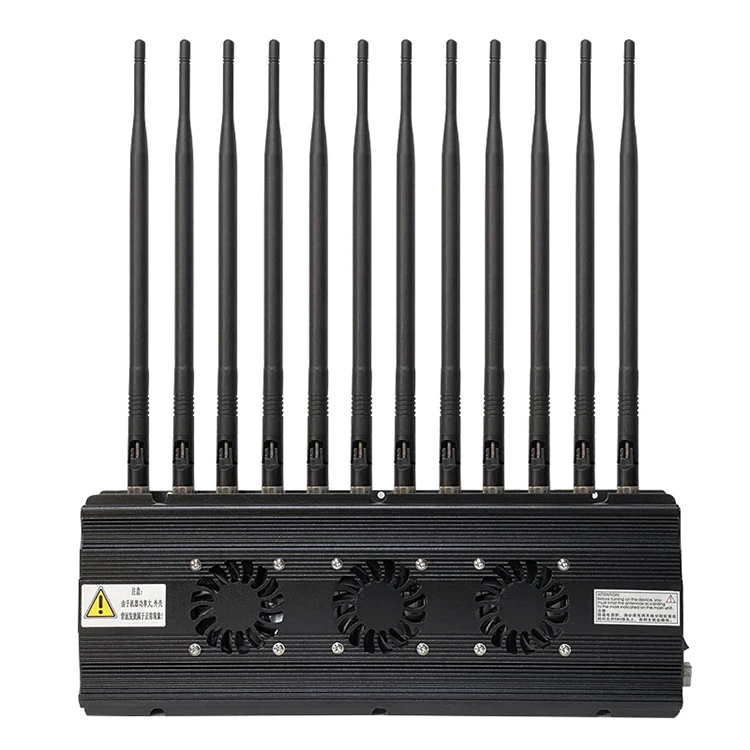
As a supplier of mini portable jammers, we offer a range of products with different features and capabilities. Our Mobile Phone Signal Jammer High Power 8 Antennas High Power Phone Signal Jammer and Mobile Phone Signal Jammer High Power 12 Antennas High Power Phone Signal Jammer are high - end products that can be customized to operate on specific frequencies, including those used by Z - Wave.
These jammers are designed with advanced technology to ensure maximum effectiveness and reliability. They are also built with portability in mind, making them suitable for various applications.
Contact Us for Procurement
If you are interested in our mini portable jammers for blocking Z - Wave signals or other wireless signals, we invite you to contact us for procurement and further discussion. Our team of experts can provide you with detailed information about our products, including technical specifications, pricing, and after - sales support. We are committed to providing high - quality products and excellent customer service to meet your specific needs.
References
- "Z - Wave Technology Overview" - Z - Wave Alliance
- "Radio Frequency Jamming Techniques" - IEEE Transactions on Electromagnetic Compatibility
- "Home Automation and Wireless Communication Protocols" - Journal of Smart Home Technologies