

Hey there! As a signal jammer supplier, I've seen a lot of questions about the differences between active and passive signal jammers. So, I thought I'd break it down for you in this blog post.
What Are Signal Jammers?
First off, let's quickly go over what signal jammers are. Signal jammers are devices designed to block or interfere with wireless signals. They're used in various situations where you don't want electronic devices to communicate, like in exam halls to prevent cheating, in prisons to stop inmates from using phones, or in sensitive business meetings to maintain confidentiality.
Active Signal Jammers
Active signal jammers are the more commonly known type. These bad boys work by actively transmitting radio frequency (RF) signals. Here's how they operate:
How They Work
Active jammers generate and emit powerful RF signals on the same frequencies as the target signals, such as those used by mobile phones (e.g., GSM, 3G, 4G, and now 5G), Wi - Fi, Bluetooth, etc. When the jammer's signal is strong enough, it overwhelms the normal communication signals. The receiving device (like your phone) can't distinguish between the legitimate signal from the base station and the jamming signal. As a result, it can't establish a proper connection, and communication is disrupted.
Advantages
- High Effectiveness: Active jammers are extremely effective in blocking signals over a wide range of frequencies. They can be adjusted to target specific frequency bands, so you can customize them according to your needs. For example, if you only want to block mobile phone signals but keep Wi - Fi intact, you can set the jammer accordingly.
- Flexibility: You can control the range of an active jammer. By adjusting the power output, you can make it cover a small area like a single room or a larger area such as a whole building. This makes them suitable for various applications, from small private spaces to large public areas.
Disadvantages
- Power Consumption: These jammers require a significant amount of power to operate. Since they're constantly transmitting strong RF signals, they need a reliable power source. This can be a drawback in situations where power is limited, like in remote areas or during power outages.
- Legal Restrictions: In many countries and regions, the use of active signal jammers is strictly regulated or even prohibited. This is because they can interfere with legitimate communication systems, such as emergency services. So, you need to be very careful when using them and make sure you have the proper authorization.
If you're interested in high - power active signal jammers, we have some great options. Check out our Mobile Phone Signal Jammer High Power 8 Antennas High Power Phone Signal Jammer and Mobile Phone Signal Jammer High Power 12 Antennas High Power Phone Signal Jammer. These jammers are designed to provide maximum signal - blocking capabilities.
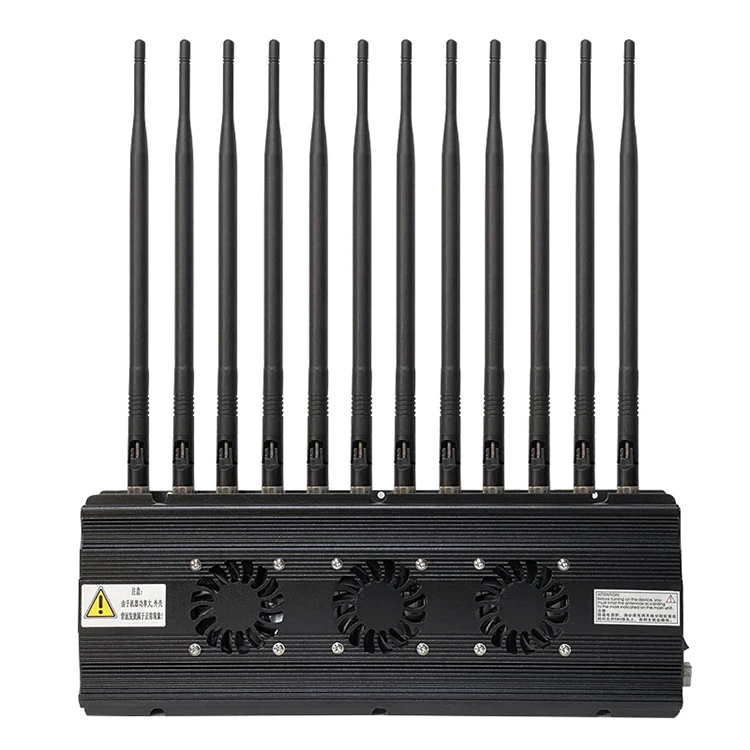

Passive Signal Jammers
Passive signal jammers, on the other hand, work in a different way. They don't actively transmit RF signals like active jammers.
How They Work
Passive jammers rely on materials that can absorb or reflect RF signals. For example, some materials can be used to line the walls of a room. When a wireless signal hits these materials, it gets either absorbed or reflected, preventing it from entering or leaving the room. This creates a kind of "shielded" environment where wireless communication is difficult or impossible.
Advantages
- Low Power Consumption: Since they don't actively transmit signals, passive jammers consume very little power. They can be used in areas where power is scarce or where you don't want to deal with the hassle of a continuous power supply.
- Legal Compliance: In general, passive jammers are more likely to be legal than active ones. They don't interfere with the normal operation of wireless communication systems in the same way as active jammers. They simply create a physical barrier for the signals, so they're often considered a more acceptable option in many places.
Disadvantages
- Limited Range and Effectiveness: Passive jammers are usually limited in their range and effectiveness. They're mainly useful for creating a small, enclosed shielded area. For example, if you line a small room with signal - absorbing materials, it can block signals within that room. But they're not very effective for large open areas or for blocking signals over long distances.
- Installation Complexity: Installing passive jammers can be more complicated than using active ones. You need to properly install the signal - absorbing or reflecting materials, which may require some technical knowledge and skills.
Key Differences Summarized
- Operation Principle: Active jammers actively transmit RF signals to interfere with target signals, while passive jammers use materials to absorb or reflect signals.
- Power Consumption: Active jammers consume a lot of power, while passive jammers have very low power consumption.
- Effectiveness and Range: Active jammers are more effective and can cover a wider range, but passive jammers are mainly suitable for small, enclosed areas.
- Legal Issues: Active jammers are more strictly regulated, while passive jammers are generally more legally compliant.
Which One Should You Choose?
The choice between active and passive signal jammers depends on your specific needs. If you need to block signals over a large area and have a reliable power source and proper authorization, an active jammer might be the way to go. On the other hand, if you're looking for a low - power, legally - compliant solution for a small enclosed space, a passive jammer could be the better option.
Contact Us for More Information
If you're interested in purchasing signal jammers or have any questions about the differences between active and passive ones, don't hesitate to get in touch with us. We're here to help you find the best solution for your needs. Whether it's a high - power active jammer for a large facility or a passive jammer for a small room, we've got you covered.
References
- "Wireless Communication Principles and Practice" by Theodore S. Rappaport
- Industry reports on signal jamming technology and regulations.