

Can a signal jammer block 2G signals?
In today's digital age, the use of signal jammers has become increasingly common in various scenarios, from military operations to privacy - sensitive environments like exam halls and government buildings. One frequently asked question is whether a signal jammer can effectively block 2G signals. As a signal jammer supplier, I'll delve into this topic to provide you with a comprehensive understanding.
Understanding 2G Signals
Before discussing jamming, it's crucial to understand what 2G signals are. The second - generation (2G) of mobile networks was a significant step forward from analog mobile communication. Introduced in the 1990s, 2G networks brought digital voice and text messaging services to the masses. Two of the most popular 2G technologies were GSM (Global System for Mobile Communications) and CDMA (Code - Division Multiple Access).
GSM operates in different frequency bands around the world. For example, in Europe, it mainly uses the 900 MHz and 1800 MHz bands, while in the United States, the 850 MHz and 1900 MHz bands are more prevalent. CDMA also has its own set of frequencies, typically in the 800 MHz range in North America. These frequencies are the carriers of 2G voice and data, and any disruption in these frequency bands can affect the normal operation of 2G devices.
How Signal Jammers Work
Signal jammers operate on the principle of interference. They work by emitting radio frequency (RF) signals on the same frequencies that mobile devices use to communicate with base stations. When a jammer is activated, it floods the airwaves with noise or interference patterns, making it difficult or impossible for mobile devices to establish or maintain a connection with the network.
The effectiveness of a signal jammer depends on several factors. First and foremost is its power output. A more powerful jammer can cover a larger area and transmit a stronger interference signal. Additionally, the number and type of antennas on a jammer play a role. Antennas are responsible for radiating the jammer's signal, and more antennas or better - designed antennas can increase the coverage and directionality of the jamming effect.
Can Signal Jammers Block 2G Signals?
The short answer is yes, a signal jammer can block 2G signals. Most modern signal jammers are designed to cover a wide range of frequencies, including those used by 2G networks. Whether it's a GSM - based 2G network or a CDMA - based one, a properly configured and powerful enough jammer can disrupt the communication.
For GSM 2G signals, a signal jammer can target the 900 MHz, 1800 MHz, 850 MHz, or 1900 MHz bands depending on the geographical location. By transmitting interference signals in these frequency ranges, the jammer can prevent mobile phones from receiving or sending signals to the GSM base stations, effectively disabling voice calls, text messages, and data services.
Similarly, for CDMA 2G, jammers can focus on the 800 MHz band where CDMA operates. This interference can render CDMA - enabled devices useless within the jammer's coverage area.
Factors Affecting Jamming Effectiveness on 2G Signals
However, the effectiveness of 2G signal jamming is not absolute and can be influenced by several factors.
1. Distance: The farther a mobile device is from the signal jammer, the weaker the jamming signal it will receive. Generally, within the specified coverage area of a jammer, 2G signals can be effectively blocked. But at the edges of the coverage or beyond, the 2G device may still be able to connect to the network, albeit with a weaker signal.
2. Obstacles: Physical obstacles such as walls, buildings, and metal structures can attenuate the jamming signal. For example, a jammer placed in one room may not be able to effectively block 2G signals in an adjacent room separated by thick concrete walls. These obstacles can absorb or reflect the jamming signals, reducing their strength and coverage.

3. Base Station Signal Strength: If a 2G base station has a very strong signal in a particular area, it may be more difficult for a jammer to overpower it. In areas close to a high - power base station, the jamming effect on 2G signals may be less pronounced.
Our High - Power Signal Jammers for 2G Blocking
As a signal jammer supplier, we offer a range of products designed to block 2G signals effectively. Our Mobile Phone Signal Jammer High Power 8 Antennas High Power Phone Signal Jammer is a great option for medium - sized areas. With eight high - gain antennas, it can cover a wide range of frequencies, including those used by 2G networks. The high - power output ensures a strong jamming signal, even in the presence of some obstacles.
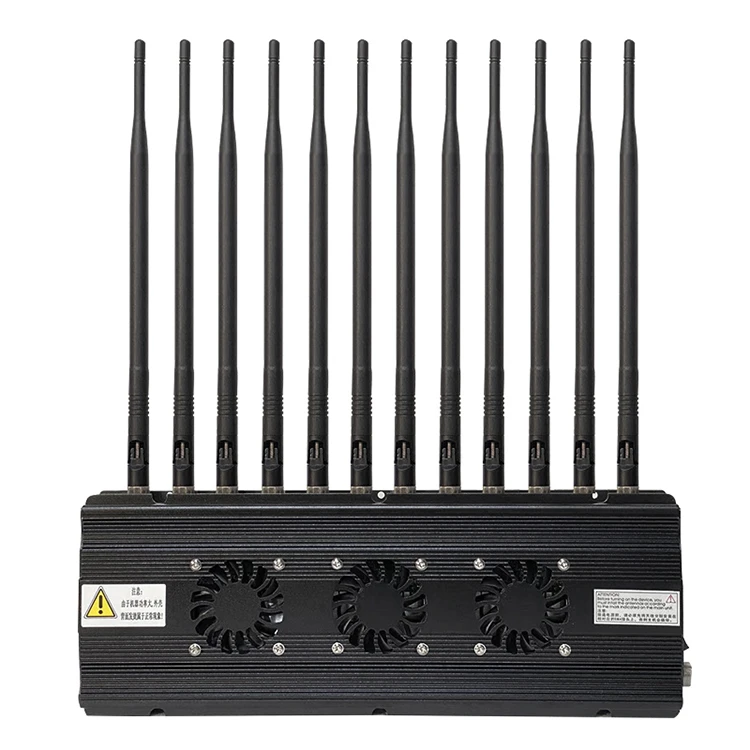
For larger areas or environments with stronger base station signals, our Mobile Phone Signal Jammer High Power 12 Antennas High Power Phone Signal Jammer is an ideal choice. The twelve - antenna configuration provides greater coverage and directionality, enabling it to effectively block 2G signals in large open spaces or areas with complex interference patterns.
Compliance and Usage
It's important to note that the use of signal jammers is regulated in many countries. In most cases, their use is restricted to specific authorized scenarios, such as in the military or in some law - enforcement operations. Before purchasing and using a signal jammer, it's essential to ensure compliance with local laws and regulations.
Conclusion and Call to Action
In conclusion, a signal jammer can indeed block 2G signals, but various factors can influence its effectiveness. As a trusted signal jammer supplier, we provide high - quality products designed to meet different needs and environments. If you are in need of a reliable signal jammer to block 2G or other mobile network signals, we are here to assist you. We offer professional advice on product selection based on your specific requirements, such as coverage area, environment, and budget.
Contact us to discuss your procurement needs, and let's work together to find the best signal - jamming solution for you.
References
- Rappaport, Theodore S. "Wireless Communications: Principles and Practice". Prentice Hall, 1996.
- Stallings, Douglas. "Mobile Communications". Pearson Education, 2009.