

The spread of drones in recent years has provided numerous conveniences, from aerial photography and delivery services to agricultural monitoring. However, these unregulated devices can pose serious threats to public safety, privacy, and critical infrastructure. As a trusted anti - drone device supplier, we understand the significance of robust anti - drone solutions and the crucial role communication protocols play in these systems.
What is a Communication Protocol in the Context of Anti - Drone Devices?
A communication protocol within an anti - drone device is a set of rules and conventions that govern how information is transmitted and received between different components of the system. These protocols ensure seamless and efficient communication, which is essential for accurately detecting, tracking, and neutralizing rogue drones.

In the arena of anti - drone technology, various communication protocols are employed, depending on the specific functions and requirements of the device. For instance, some anti - drone devices need to communicate with a central control station to relay data about detected drones, such as their location, speed, and flight path. Others may need to communicate directly with the drone itself in an attempt to disrupt its normal operation.
Common Communication Protocols Used in Anti - Drone Devices
RF (Radio Frequency) Protocols
Radio frequency is one of the most widely used communication methods in anti - drone devices. Drone communication systems typically operate on specific RF frequencies, such as 2.4 GHz and 5.8 GHz. Anti - drone devices can use RF protocols to detect the electromagnetic signals emitted by drones.
When a drone is in flight, it continuously exchanges data with its remote controller using RF signals. Anti - drone devices equipped with RF sensors can pick up these signals, analyze their characteristics, and determine the presence, type, and location of the drone. Once detected, the anti - drone device can then use RF jamming techniques to disrupt the communication link between the drone and its operator.
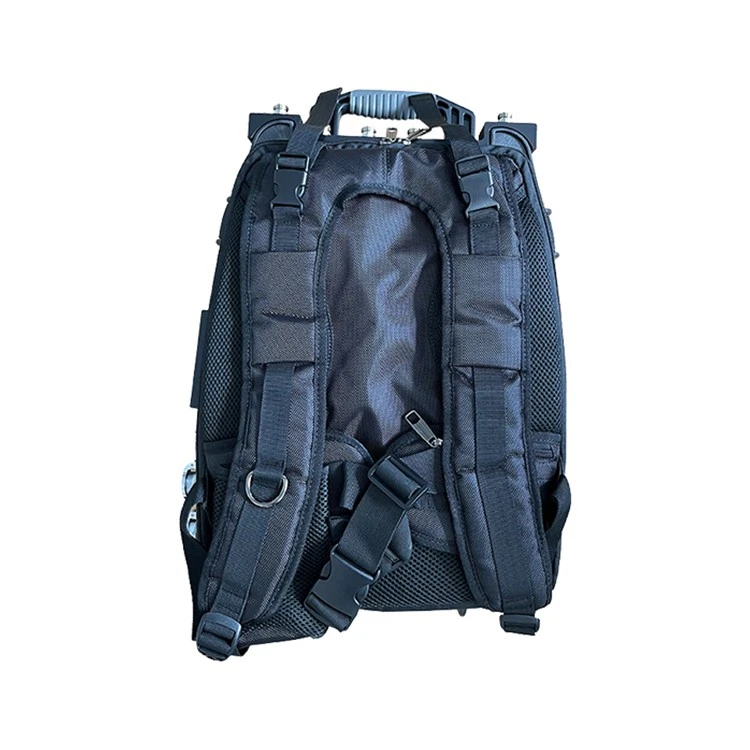
For example, our Individual Soldier 8 Antenna Backpack Portable Anti Drone System FPV utilizes advanced RF technology. It can quickly detect drone signals within a certain range and emit powerful RF interference to force the drone to land or return to its point of origin.
Wi - Fi Protocols
Many modern drones are connected to Wi - Fi networks, either for streaming live video or receiving commands from a smartphone app. Anti - drone devices can use Wi - Fi communication protocols to detect and disrupt these connections.
Wi - Fi operates in the 2.4 GHz and 5 GHz frequency bands. Anti - drone systems can scan these bands for Wi - Fi signals characteristic of drones. Once identified, they can flood the Wi - Fi channels with noise, effectively blocking the drone's communication link. This is particularly useful in areas where drones are likely to use Wi - Fi for control, such as urban environments or around public events.
GPS (Global Positioning System) Protocols
GPS is a vital component of most drones, as it allows them to navigate and maintain their position in the air. Anti - drone devices can target GPS communication protocols to disable a drone's navigation capabilities.
GPS satellites transmit signals on specific frequencies, and drones receive these signals to determine their location. Anti - drone systems can generate false GPS signals or jam the genuine GPS signals, causing the drone to lose its sense of position. Without accurate GPS data, the drone may become disoriented and either land or fly erratically.
The Role of Communication Protocols in Anti - Drone Device Functionality
Detection
Effective communication protocols are the backbone of drone detection in anti - drone devices. By accurately analyzing the signals received through different communication channels, these devices can distinguish between normal background noise and the unique signals emitted by drones.
For example, the RF protocol allows anti - drone devices to identify the modulation patterns and frequencies used by different drone models. This information can be used to create a database of known drone signals, enabling the device to quickly recognize and alert users when a potential threat is detected.
Tracking
Once a drone is detected, communication protocols are used to track its movement. RF sensors can continuously monitor the strength and direction of the drone's signals to determine its trajectory. In combination with other tracking technologies, such as radar, optical cameras, and thermal imaging sensors, the anti - drone device can provide a comprehensive picture of the drone's position and movement.
Neutralization
Communication protocols are also essential for neutralizing rogue drones. Whether it's through RF jamming, GPS spoofing, or other methods, the anti - drone device must be able to communicate effectively with the drone's control system to disrupt its normal operation.
For example, when an anti - drone device uses RF jamming, it needs to transmit interference signals on the same frequencies as the drone's communication link. This requires precise control and synchronization of the device's transmission, which is achieved through well - defined communication protocols.
Benefits of Our Anti - Drone Devices' Communication Protocols
As a leading anti - drone device supplier, we have invested heavily in research and development to ensure that our products use the most advanced and reliable communication protocols.
High Sensitivity
Our anti - drone devices are equipped with highly sensitive sensors that can detect even the weakest signals from drones. This allows for early detection of potential threats, giving users more time to respond.
Wide Coverage
We have optimized our communication protocols to cover a wide range of frequencies and communication channels. This ensures that our devices can detect and neutralize various types of drones, regardless of their communication technology.
Real - Time Response
Our anti - drone devices are capable of real - time data processing and response. Once a drone is detected, the device can quickly analyze the situation and take appropriate action, such as jamming the drone's communication link or alerting the user.
Choosing the Right Anti - Drone Device Based on Communication Protocols
When selecting an anti - drone device, it's crucial to consider the communication protocols it uses. Different scenarios may require different types of protocols.
Security - Critical Areas
In areas such as airports, government buildings, and military installations, where security is of the utmost importance, a device that uses a combination of RF, GPS, and Wi - Fi protocols may be the best choice. This multi - protocol approach provides comprehensive protection against a wide range of drone threats.
Public Events
For public events such as concerts and sports games, a portable anti - drone device that focuses on RF and Wi - Fi jamming may be sufficient. These devices can quickly and effectively prevent drones from interfering with the event.
Connect with Us for Anti - Drone Solutions
Whether you're looking for a portable anti - drone system for personal use or a comprehensive solution for large - scale security, our team of experts is here to help. We offer a wide range of anti - drone devices that are designed to meet the diverse needs of our customers.
If you're interested in learning more about our products or would like to discuss your specific requirements, please don't hesitate to reach out. We're committed to providing you with the best anti - drone solutions and excellent customer service. Let's work together to create a safer and more secure environment.
References
- D. Liu, X. Wang, and Y. Zhang, "Research on Drone Detection and Anti - Drone Technology Based on Multi - Sensor Fusion," Journal of Sensors, vol. 2021, Article ID 6667778, 10 pages, 2021.
- S. Singh, A. K. Singh, and A. K. Verma, "A Review of Anti - Drone Technologies and Their Applications," International Journal of Advanced Research in Electrical, Electronics and Instrumentation Engineering, vol. 9, no. 10, pp. 123 - 130, 2020.